INSIDE MOLDOVA EU accession negotations begin | SIS warns of Russian data collection | Moldatsa’s director included false information in the CV
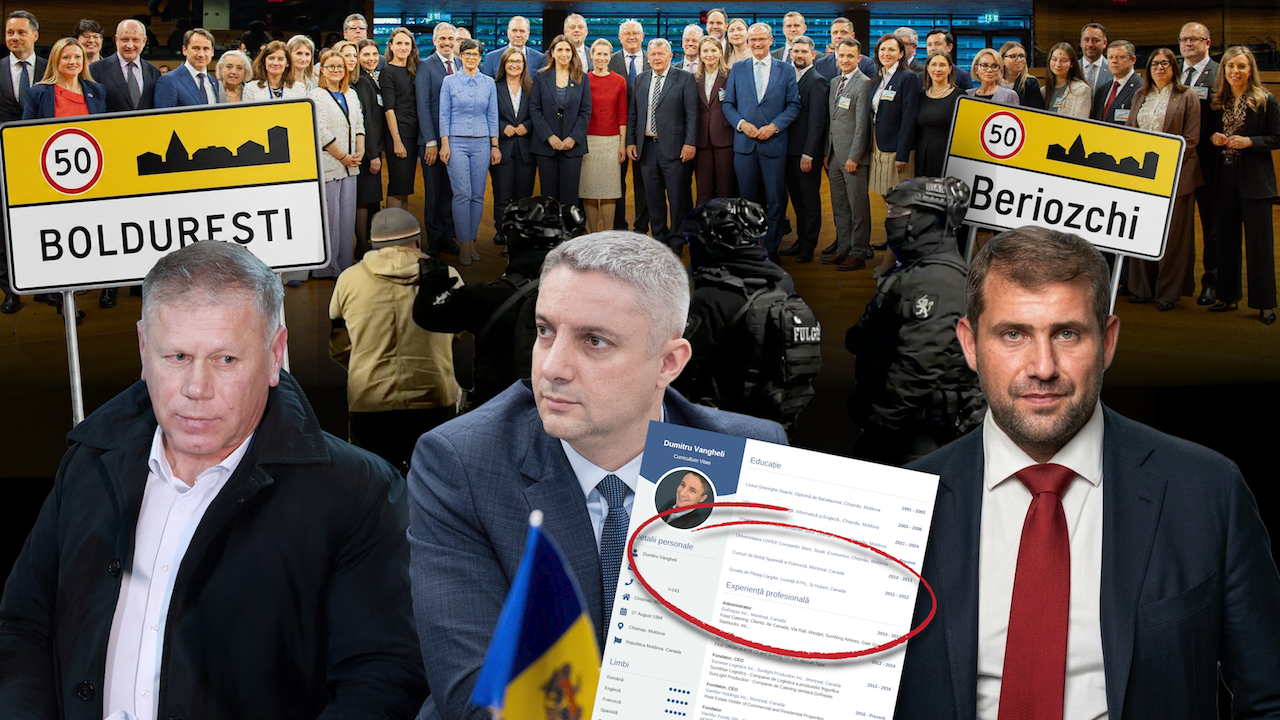
Nearly four years after Moldova obtained EU candidate status in June 2022, the first negotiation cluster, “Fundamentals,” was officially opened on Monday, 15 June, after all 27 EU member states unanimously adopted the common negotiating position.
The week also brought several developments related to national security, justice, and public accountability. The Moldova’s Information and Security Service warned that Russian intelligence services are systematically collecting personal data belonging to Moldovan citizens for fraud and influence operations, while prosecutors obtained a new arrest warrant for fugitive oligarch Ilan Șor in a separate case concerning the alleged embezzlement of 100 million dollars.
Meanwhile, an investigation by Ziarul de Gardă revealed that MoldATSA director Dumitru Vangheli included false information in the CV that helped him secure his position.
Moldova officially opened accession negotiations with the European Union
Moldova and Ukraine officially opened accession negotiations with the European Union on Cluster 1, “Fundamentals,” during a meeting in Luxembourg. The Moldovan delegation was led by Prime Minister Alexandru Munteanu. President Maia Sandu said the chapter covers areas that matter most to citizens, including justice reform, anti-corruption efforts, fundamental rights, and institutions that work in the public interest.

Moldova also received renewed political support from European partners. Marcel Spatari, chair of Parliament’s Commission for European Integration, signed a joint declaration together with representatives of European affairs committees from Italy, Greece, Croatia, and Portugal. The document praised Moldova’s progress and reaffirmed support for its EU accession, stressing that the country’s future lies within the European family.
The Moldova–Poland Parliamentary Assembly adopted a similar declaration during its eleventh session hosted by the Polish Sejm. At the same time, the government approved several diplomatic appointments. Inga Ionesii was named ambassador to India, Victor Lăpușneanu became Moldova’s permanent representative to the Council of Europe, and Alexei Țurcan was appointed consul general in Odesa, Ukraine.
Moldova’s Information and Security Service warned about Russian influence and national security
The European Union expanded its sanctions regime against individuals accused of destabilizing Moldova and undermining its democratic institutions. Six new names were added to the sanctions list, including Irina Vlah, leader of the Heart of Moldova Party. The sanctions also target Anton Tregub, described by European institutions as a Russian coordinator linked to Victoria Furtună’s Moldova Mare party, which was excluded from elections because of illegal financing and vote-buying allegations. Another sanctioned individual is Anton Usov, a Russian citizen accused of coordinating influence operations through church networks, mobilizing priests, facilitating payments through Russian channels, and collecting personal data during religious events. Following the latest additions, EU restrictive measures now apply to 29 individuals and five entities.

Meanwhile, Moldova’s Information and Security Service warned that Russian intelligence services are carrying out a coordinated effort to collect personal data belonging to Moldovan citizens. According to SIS, the information comes from databases sold on the dark web, hacked private servers, and databases allegedly gathered by the Șor criminal group. Authorities estimate that information on about 145,000 citizens has been collected, including names, addresses, telephone numbers, email accounts, and copies of identity documents. SIS says the data are later transferred to organized criminal groups and used in financial fraud schemes targeting Moldovan citizens.

Officials described these actions as part of a broader hybrid war intended to create insecurity and undermine public trust. At the same time, Transnistria extended its state of economic emergency until 17 July. The measure, in force since December 2025, reflects the region’s continuing economic crisis caused by reduced gas supplies. Authorities continue to pay public sector salaries in installments, while economic data indicate that Transnistria’s economy contracted by at least 18% in 2025, marking its deepest crisis in more than two decades.
New arrest warrant on Ilan Șor
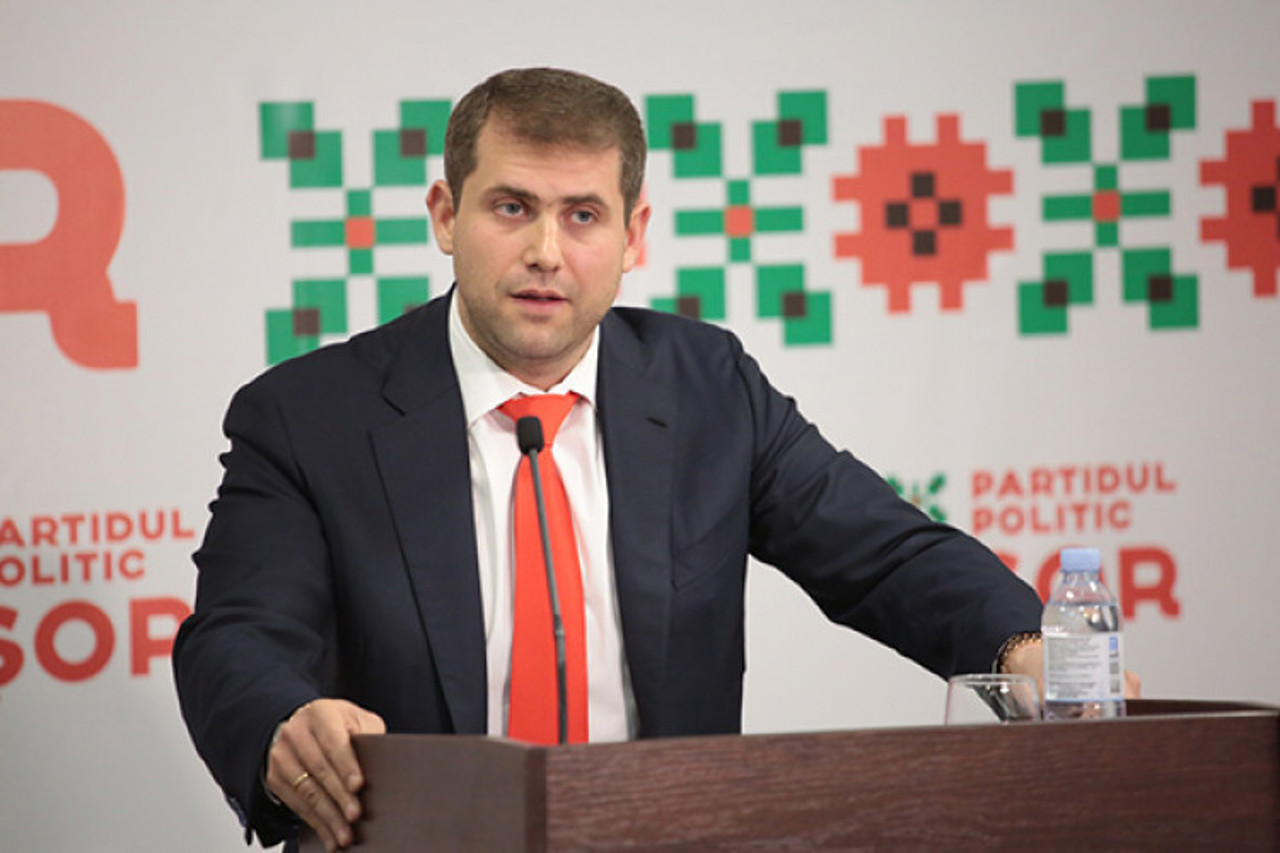
Anti-corruption authorities also launched a criminal investigation into the organization of international Certiport examinations. According to the National Anticorruption Center, a teacher and several accomplices allegedly accepted payments ranging from 3,500 to 12,000 lei from students and university applicants in exchange for guaranteeing successful exam results and obtaining certificates that exempt candidates from taking the computer science baccalaureate exam. In another major development, prosecutors obtained a 30-day arrest warrant in absentia for fugitive oligarch Ilan Șor in a separate criminal case involving the alleged embezzlement of 100 million US dollars from Banca de Economii between 2013 and 2014. Prosecutors accuse Șor of organizing and coordinating a criminal group responsible for implementing the scheme. Șor is already sentenced to a 15 year prison sentence in the bank fraud case but remains in Russia.
The Venice Commission issued its opinion on recent legislative amendments concerning the appointment of international members to judicial and prosecutorial vetting commissions. It concluded that the mechanism introduced to unblock appointments is compatible with international standards. Earlier this year, Parliament lowered the voting threshold required for appointing international members from 61 to 51 votes, allowing Herman von Hebel and Bernard Lavigne to join the prosecutor evaluation commission after previous voting attempts had failed.
Courts deliver decisions in high-profile cases
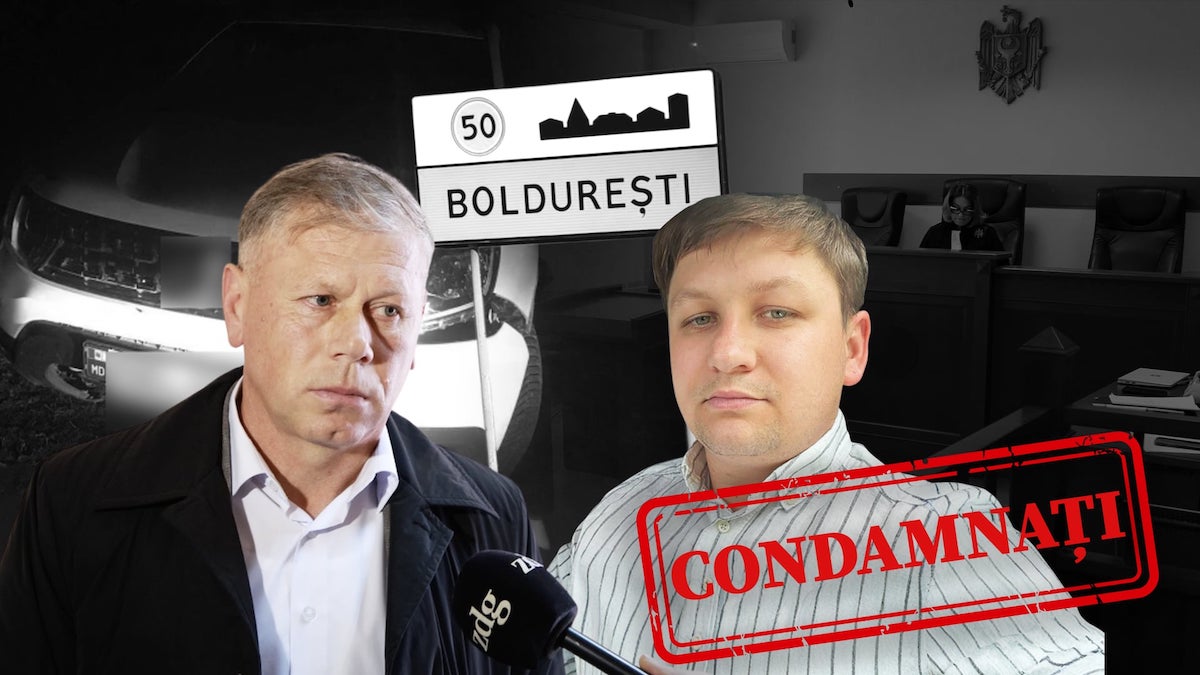
The Center Court of Appeal upheld the conviction of former Boldurești mayor Nicanor Ciochină in the case involving the death of a 14-year-old boy, Mihăiță. Judges maintained his seven-year prison sentence in an open-type penitentiary and upheld a six-month sentence for accomplice Ion Andronache. The defense described the ruling as unlawful, while the victim’s family welcomed the decision as a long-awaited form of justice after more than two years of legal proceedings. The ruling can still be challenged before the Supreme Court of Justice.
Another criminal case that drew attention concerns former bailiff George Boțan, who lost his professional license and is accused of causing severe bodily harm that led to the death of businessman Iurie Gundiuc, founder of Neocasa and Hollman Construct. Prosecutors announced that the case has been sent to court, seven months after ZdG highlighted allegations involving threats, business disputes, and unresolved legal proceedings surrounding the incident.
A Moldovan court also sentenced Stepan Găină to 20 years in prison on 18 June for the 2011 murder of a 60-year-old man in the village of Beriozchi, Anenii Noi district. According to prosecutors, the victim was beaten to death during a dispute over payment for work performed at the defendant’s household. The attack took place between 24 and 26 December 2011, with the victim suffering multiple blows, including to the head, resulting in fatal injuries. The case attracted renewed attention in December 2025, when police announced the detention of three suspects in connection with the murder. Investigators later stated that there were indications the main suspect may have been involved in other similar crimes and alleged that the bodies of some victims may have been used as animal feed on his farm. The verdict can still be appealed.
Political developments and new ZdG investigation
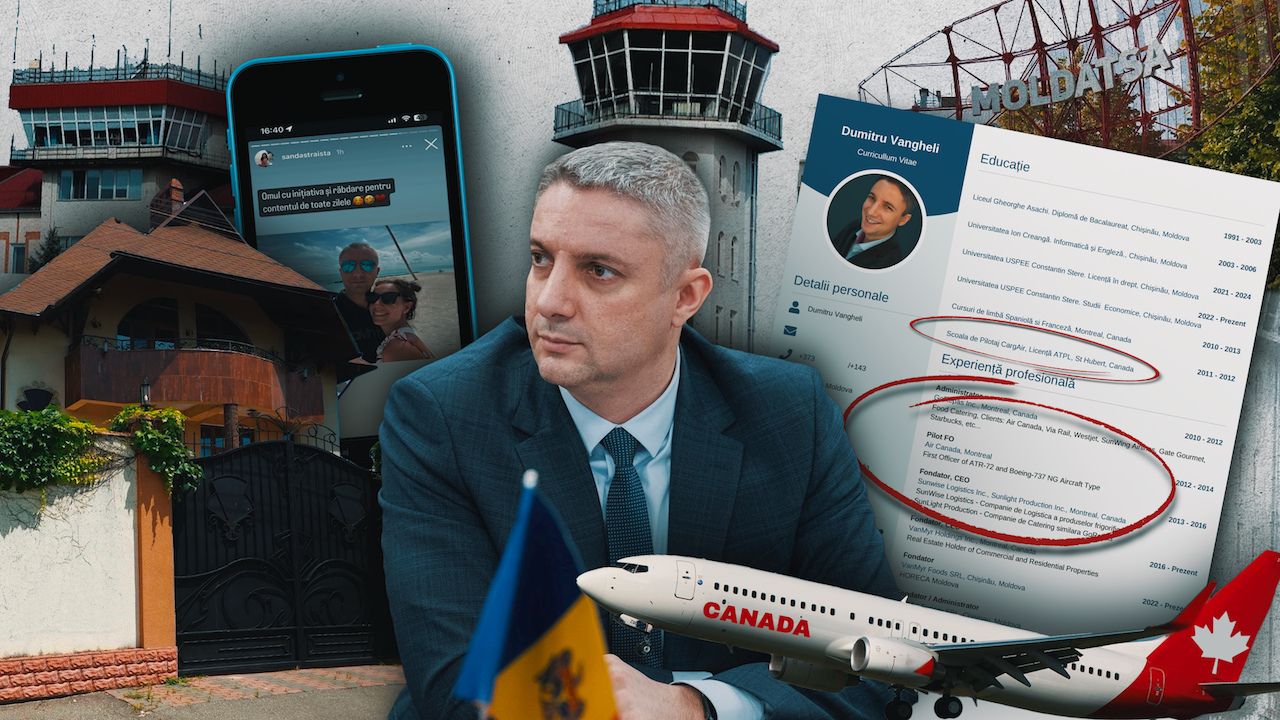
At the same time, a Ziarul de Gardă investigation raised serious questions about the management of the state-owned enterprise MoldATSA. Journalists found that director Dumitru Vangheli included false information in the CV that helped him secure the position, claiming to have trained at a major Canadian flight academy and worked as an airline pilot for Air Canada. Both claims were denied by the institutions concerned. The investigation also examined the hiring and promotion of his partner, the employment of a former judge who failed integrity vetting twice, salary increases for management staff, generous bonuses, donations made to the ruling party after winning the competition, and inconsistencies involving Vangheli’s businesses and assets in Canada and Moldova. Although he declared substantial wealth, journalists found that several of his companies had been dissolved or were inactive, while his luxury residence remains mortgaged for multimillion-credit obligations.
The ruling Party of Action and Solidarity announced Alexandru Vornicu as its proposed future candidate for mayor of Chișinău in the 2027 local elections. Vornicu, currently serving his second term as mayor of Stăuceni, was re-elected in 2023 with more than 77% of the vote. PAS highlighted his achievements, including a fourfold increase in the local budget, the attraction of European funding, the transformation of Stăuceni from a commune into a city, and stricter rules for developers that helped eliminate real-estate controversies and support urban modernization.
Education and examination debates continue
The Ministry of Education and the National Agency for Curriculum and Evaluation reviewed a petition submitted by students from the science track concerning two questions from the national mathematics baccalaureate examination. After consulting specialists and members of the evaluation commission, authorities concluded that the items were valid and reported that the overall completion rate for the 2026 examination session was higher than in previous years.
At the same time, a corruption investigation involving international Certiport examinations raised broader concerns about the integrity of alternative certification systems. The National Anticorruption Center announced criminal proceedings against several individuals, including a teacher working within an institution authorized to organize Certiport exams. Investigators suspect that, between March and April 2026, the teacher and several accomplices accepted payments ranging from 3,500 to 12,000 lei from students and university applicants in exchange for guaranteeing successful exam results and the issuance of international certificates. According to investigators, these certificates could later be used to obtain exemptions from the computer science baccalaureate examination. Authorities are continuing the investigation to determine the full extent of the scheme and identify all individuals involved.