Justice system, migrant workers, USA, and foreign investments. ZdG Interview with Canada’s Ambassador to Moldova
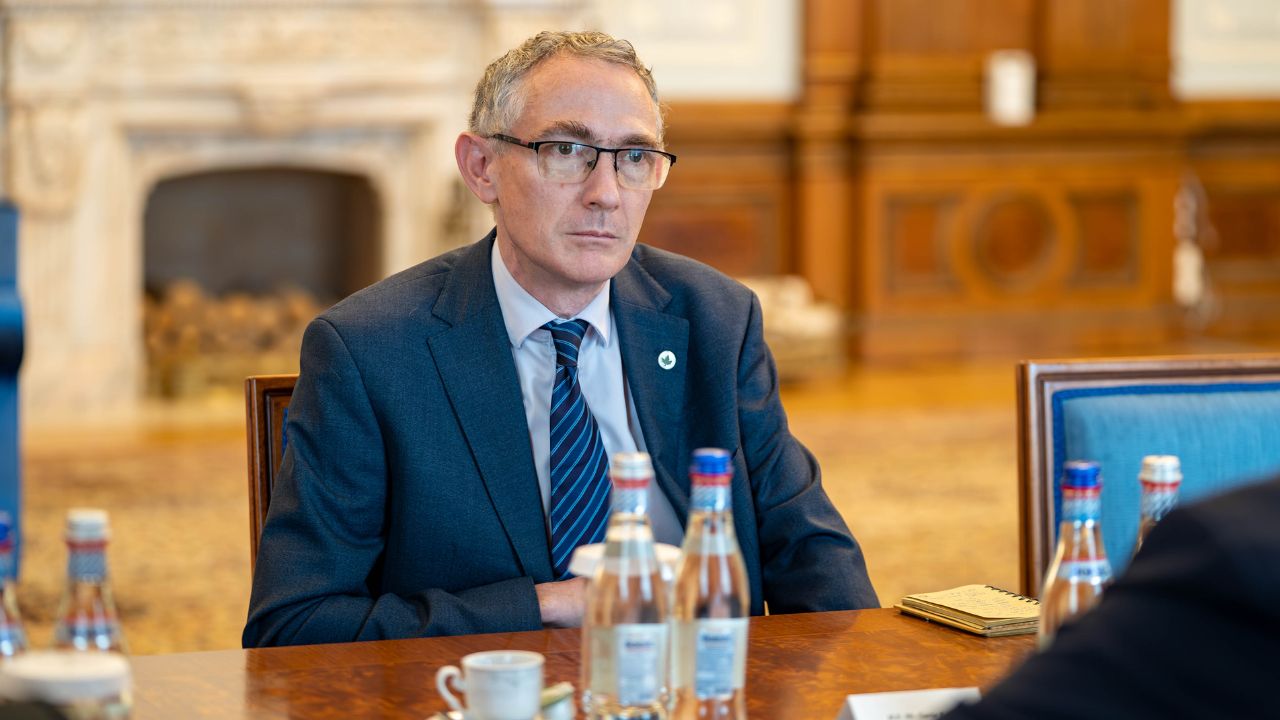
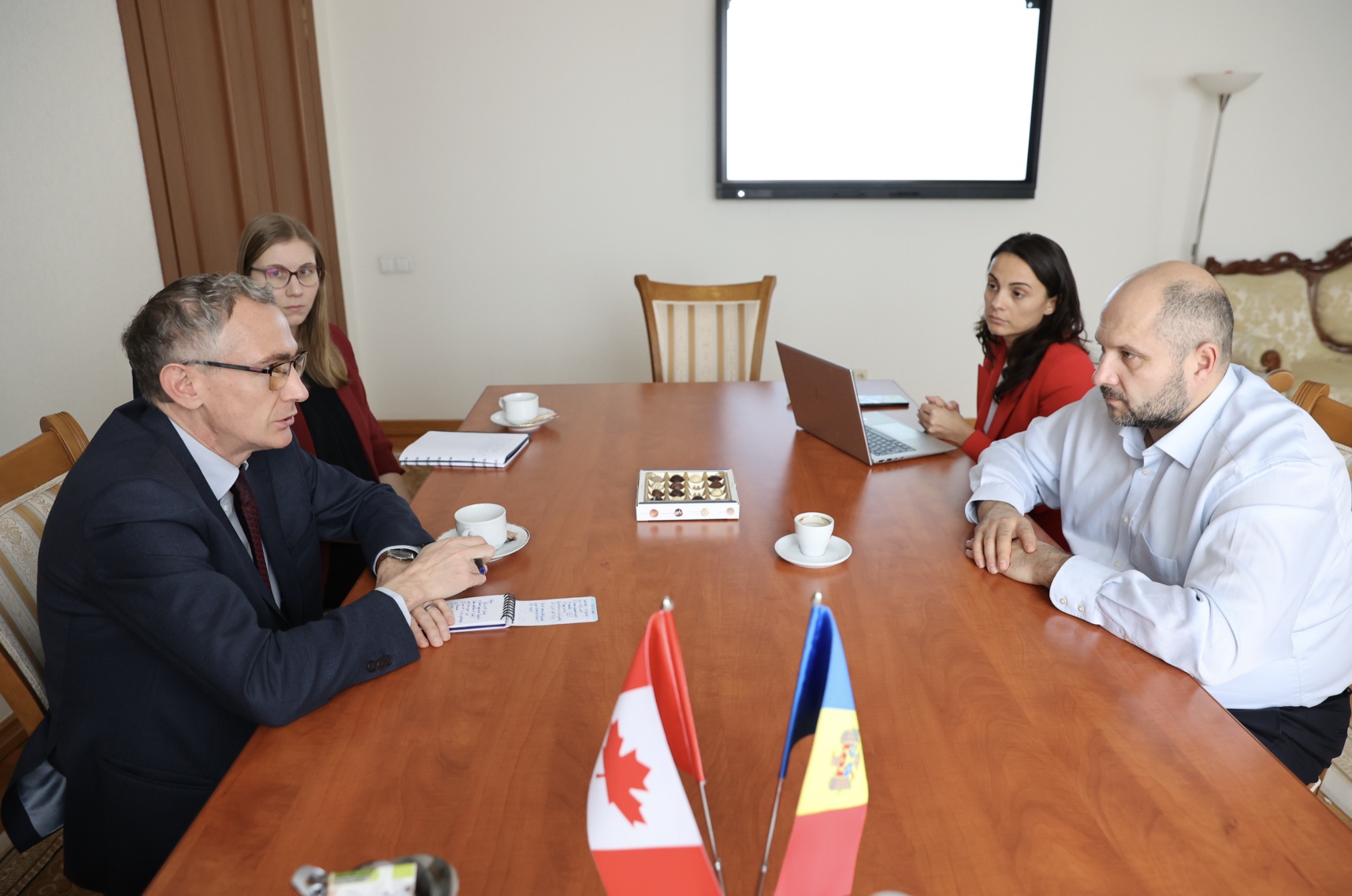
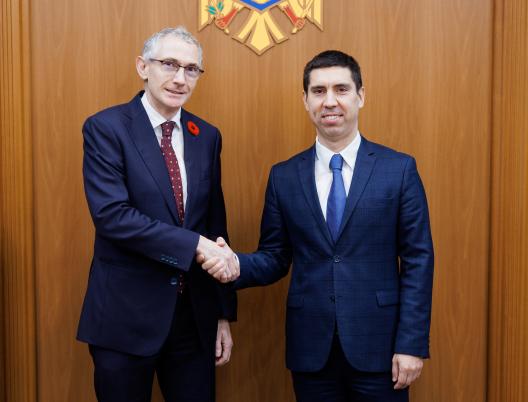
“Joining the European Union will be an achievement that will benefit not only the current generation, but also your children and grandchildren,” said Canada’s Ambassador to Moldova in an interview with ZdG at the end of his mandate. The Canadian diplomat believes that Moldova’s European path, the reforms carried out in recent years, and the country’s resilience in the face of external threats have significantly changed the way Moldova is perceived internationally. Gavin Buchan became Canada’s Ambassador to Moldova, with residence in Bucharest, in 2023, during a period marked both by Moldova’s European integration process and by the war in Ukraine.
In the interview with ZdG, the ambassador speaks about Moldova’s reforms and challenges, the potential for Canadian investment, support for Ukraine, relations between Canada and the United States following Donald Trump’s return to the White House, as well as the benefits and compromises that come with European Union membership.
— You became Ambassador to Moldova in 2023, when the country was about a year removed from receiving EU candidate status. Three years have already passed since then. What is the most important change you have noticed in Moldova during this period?
— Before 2020, relations between Canada and Moldova were fairly limited. There were a few specialists who studied the issue of the Transnistrian region from a security perspective, but in general Moldova did not occupy an important place on Canada’s public agenda.
After 2020, things began to change. Moldova clearly chose its European direction, orienting itself toward the European Union and Western institutions. Then the war in Ukraine began, and there was a genuine feeling that Moldova’s future was at risk. If the Russians had reached Odessa, there was a perception that Moldova could have been drawn back into what they call the “Russkiy Mir” or “Russian World.”
At the same time, Moldova was seen as a country that was trying to do things the right way: implementing reforms, democratizing its institutions, and strengthening its economy. There was a very clear sense that Moldova was under threat and that Maia Sandu was a leader capable of speaking directly to Western leaders and saying: “We are fighting for our future. We are fighting for the right to decide our own future. Can you help us?”
That message resonated strongly in Canada. This is why Maia Sandu’s visit to Canada in 2023 was such a defining moment. It opened a new level of reflection and engagement on Canada’s part, including the allocation of additional resources.

— Are there areas where you see real progress? And in which areas do you believe there is still a lot of work to be done?
— I would quote one of the European Commissioners, who said that Moldova is the best student in the EU enlargement class. Indeed, you have made progress in almost every area. There have been numerous important economic and institutional reforms.
However, even if you are the best student in the class, that does not mean you have graduated. There are many areas where, despite the progress being made, there is still a great deal of work ahead. The justice sector is one of the most difficult examples. There must be an independent judiciary, but for that to exist you need a judicial system that is capable of functioning in a truly and fully independent manner. These things, however, cannot be built overnight.
Canada previously sent experienced judges to work with their Moldovan counterparts on developing an updated version of the Code of Values and Ethics for the judicial system. More recently, a new cooperation project with Canada’s Department of Justice was approved for the coming years. As a result, there will be even greater cooperation between the justice systems of Canada and Moldova in the period ahead.
— Last week, European partners announced investments of more than one billion euros for Moldova. Is your country an attractive destination for Canadian companies?
— At present, trade between Canada and Moldova is still relatively limited. That is simply a historical fact. But do we see potential? Absolutely.
As Moldova becomes more integrated into the European market and European supply chains, it becomes easier and easier for Canadian companies to operate here.
There is also a political factor. Moldova is perceived as a small but courageous country that is doing the right things in the face of enormous pressure from Russia. That story attracts attention. There are businesspeople and investors who are willing to look at Moldova differently precisely because of this reality. In the past, when Moldova was viewed merely as a small country situated between East and West, with an unclear political situation, interest was much lower.
— What should Moldova do to attract more investors, including investors from Canada?
— Transparency and the rule of law are essential. In my opinion, Moldova is making important progress in both of these areas.
If I were to give a single piece of advice, it would be to make use of the Moldovan diaspora. That is your secret weapon. You have many Moldovans living in Canada. You recently opened a new honorary consulate in Montreal. These people maintain a special connection with their country of origin and will be interested in returning to do business or invest.
— In which sectors of the Moldovan economy do you see the greatest potential for investment and cooperation between Moldova and Canada?
— There is already a certain level of Canadian interest in the defense industry sector. There are companies that see opportunities for cooperation here. Energy is another highly promising field, especially clean energy.
Information technology is also a sector with significant potential, considering the strong capabilities that Moldova has developed in the IT field. If we look at Moldova’s strengths, the wine industry is an obvious example. Foreign investment in this sector could come quite naturally.
— Canada is one of Ukraine’s strongest supporters. How has the war changed Canada’s priorities? You are also involved in coordinating the International Coalition for the Return of Deported Ukrainian Children. I would also like you to speak about this issue.
— Approximately one and a half million people of Ukrainian descent live in Canada. It is one of the largest diaspora communities in our country. Canada was among the countries that responded most firmly to Russia’s invasion, alongside the Baltic states and Poland. For us, it was very clear that the invasion was illegal, unjustified, and an act of aggression. Under no circumstances can we accept that Russian aggression should result in the loss of Ukraine’s territorial integrity or sovereignty.
Since 2022, Canada has committed more than 25 billion Canadian dollars in support of Ukraine. We had military training programs for Ukrainian forces as far back as 2014 through Operation Unifier. We also had development programs, but after 2022 all of these efforts increased not tenfold, but hundreds of times.
The issue of Ukrainian children taken by Russia is one of the most serious aspects of the atrocities committed by Russia in Ukraine. We are talking about tens of thousands of Ukrainian children who were taken away from their families and brought to Russia. Some of them were sent to military training camps. Others were subjected to indoctrination programs. For many of the children who have already returned, the psychological trauma is very deep. This issue is part of the broader human dimension of the peace process in Ukraine.
— Since Donald Trump returned to the White House, visible tensions have emerged, including because of the tariffs imposed by his administration. What does the relationship between Canada and the United States look like today?
— The economic relationship between Canada and the United States has been built over six, or even eight, decades of continuous integration. This integration has brought enormous benefits to both sides, but it has also created dependencies.
Approximately 70 percent of Canadian exports go to the United States. When the Trump administration decided to introduce trade tariffs, including against Canada, it represented a reversal of the integration process. It was a highly disruptive change and it represents a major challenge for both economies.
At the same time, it is a decision that the United States has the right to make. It will affect the American economy and it will affect the Canadian economy. However, we are mature countries and we will find ways to offset these effects by developing trade relationships with other regions of the world.
As for the rhetoric about turning Canada into the “51st state” of the United States, it irritates Canadians. We are very proud of our independence, and nothing will change that.
— After Donald Trump returned to power, articles and commentaries appeared, including in publications such as Politico, about closer ties between Canada and the European Union. How do Canadians view this idea? Is it realistic to imagine Canada as part of the European Union?
— There are many practical, legal, and geographical obstacles that make Canada’s accession to the European Union complicated, if not impossible. Nevertheless, this does not stop Canadians from smiling when they hear the idea. In fact, about a month ago, a poll showed that a majority of Canadians would view membership in the European Union favorably. Of course, there are very strong arguments against such a possibility. However, none of these arguments prevents the continued deepening of cooperation between Canada and the European Union. And that is exactly what we are doing now.
We have a partnership in the field of security and defence. We have the Comprehensive Economic and Trade Agreement (CETA), one of the most ambitious and effective modern trade agreements in the world. Canada has become the first non-European partner involved in certain European security cooperation mechanisms, including in the field of defence production.
We have strong cultural affinities with Europe. From my perspective, there has never been a better moment for relations between Canada and the European Union. There are many complementarities. Europe needs energy, and Canada is an important supplier. There are opportunities in the areas of critical minerals and supply chains. There are major investment projects in Canada that are seeking European capital. All of this means that the current period can be described as a new golden age in relations between Canada and the European Union.
— Why is EU membership important, and what does it really mean for Moldova? Are there only benefits, or does it also involve certain compromises?
— Any international agreement involves certain compromises. And accession to the European Union is, in essence, a very broad international agreement.
It means giving up a very limited and very specific part of your sovereignty in order to make decisions together with the other members. These realities must be clearly understood and accepted with full awareness. But if someone is looking for arguments in favour of accession, I would recommend travelling to the Baltic states, Poland, or Romania. The progress these countries have achieved since joining the European Union is extraordinary. The increase in living standards is remarkable.
I was a diplomat in Central and Eastern Europe in the early 1990s. The difference between what I saw then and what I see today is astonishing. This is not only about European funds. It is about participation in the single market, freedom of movement, and the predictability of rules. It is about the ability to travel and do business within an integrated space. In the long term, it is also about joining the Schengen Area, about no longer seeing endless lines of trucks at border crossings, and about allowing goods and people to move freely. The benefits that come from the entire European Union system are extraordinary.
— Do you have a message you would like to share with the citizens of Moldova?
— In Canada, we admire and respect everything you have achieved in recent years. We admire your struggle for democracy, freedom of expression, and the right to determine your own future, especially under such difficult circumstances.
My message is simple: stay on this path. Joining the European Union will be an achievement that benefits not only the current generation, but also your children and grandchildren. Continue the reforms that you have started. If you persevere, life will become better for you and for future generations.
— What will you take with you from Moldova?
— There will certainly be a few bottles of Moldovan sparkling wine in the luggage I take back home.
But beyond that, I will take with me the sense of partnership and cooperation that I felt here, as well as the satisfaction of working on projects that concretely improve people’s lives. This will remain one of the most cherished memories of my mandate.
I find Moldova fascinating. It is a meeting place between different worlds, between diverse historical, cultural, and political influences. In a certain sense, this reminds me of Canada. Canada is a bilingual country. We have two legal systems and an identity built from multiple traditions and cultures. From this perspective, Moldova feels more familiar to me than some other countries in the region. I believe Moldova has the potential to serve as a bridge between different worlds.