EXCLUSIVE “It is far better for Norway to live in a world where Putin fails than in a world where Putin succeeds”. ZdG interview with Espen Barth Eide, Norway’s Minister of Foreign Affairs
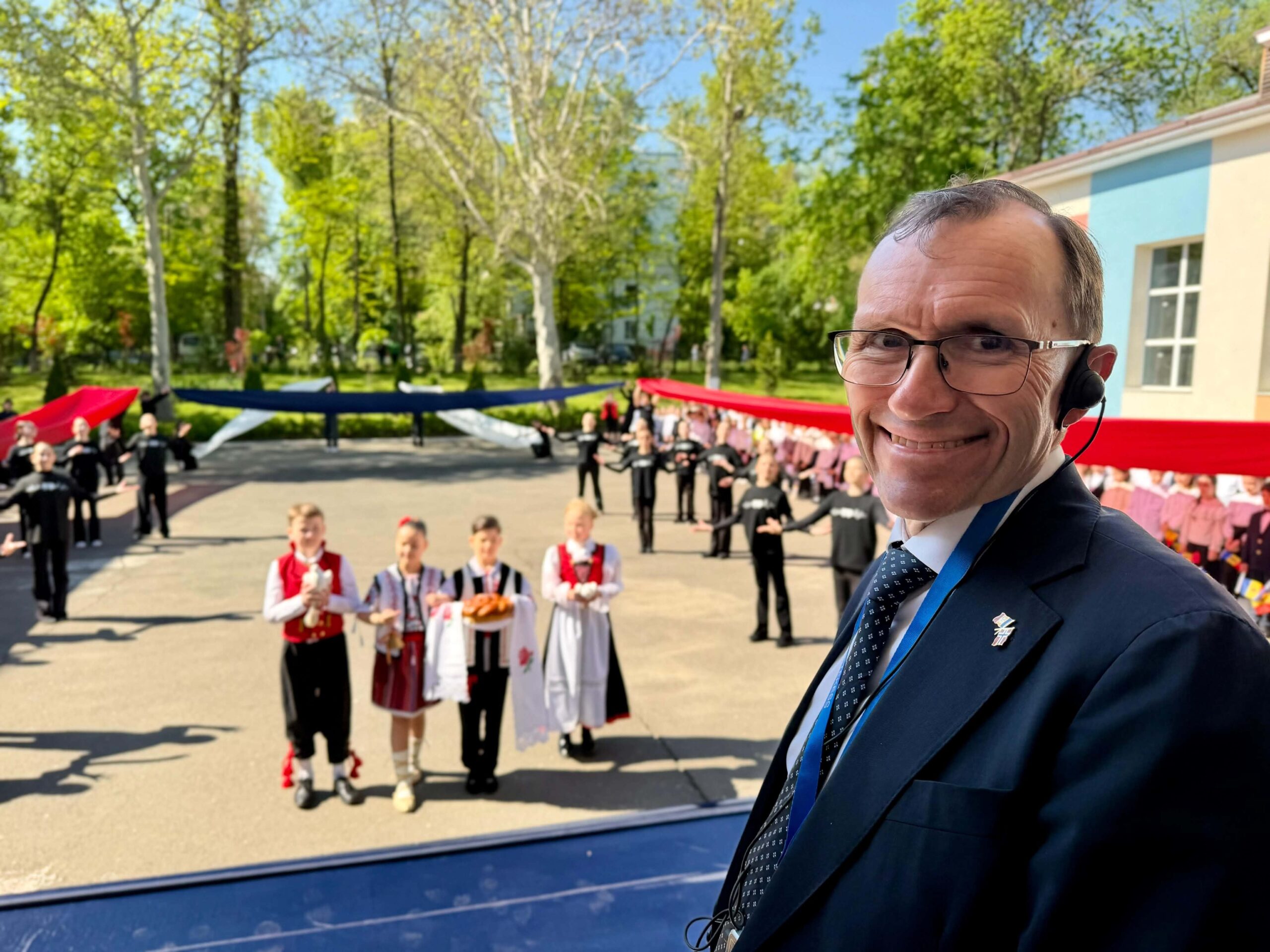
“We cannot each simply say ‘Norway first,’ ‘Moldova first,’ or ‘America first,’ because that would mean a worse world for everyone. We are stronger together, and democracies must remain united,” Norway’s Minister of Foreign Affairs said in an interview with ZdG while visiting the Republic of Moldova for the Council of Europe meeting that marked the end of our country’s presidency.
Espen Barth Eide is one of Norway’s most well-known diplomats. Throughout his career, he has held several important positions in the Oslo government, including Minister of Defence and Minister of Climate and the Environment. Since 2023, he has led Norwegian diplomacy as Minister of Foreign Affairs.
In an interview with ZdG, the official spoke about combating corruption, the role of journalism in a democratic society, European security, and the war in Ukraine. We also discussed investments in renewable energy and the financial support Norway provides to the Republic of Moldova.
– Is this your first visit to the Republic of Moldova? What are your impressions so far?
– I have visited the Republic of Moldova several times and feel very attached to this country. This is my third visit here in the past three years, but I also came many years ago, when Iurie Leancă was Minister of Foreign Affairs and later Prime Minister.
I am very impressed by Maia Sandu and the direction in which the entire government is moving. The whole country is heading westward, toward strengthening a strong democracy, the rule of law, and economic modernization. I know this is difficult work, and I know every transition comes with challenges, but I believe the Republic of Moldova is doing the right thing, and we are very happy to be close partners.
We make significant contributions through several projects related to energy supply and the energy transition, energy efficiency, and other areas of reform. We do this because we believe it is beneficial for all of Europe.
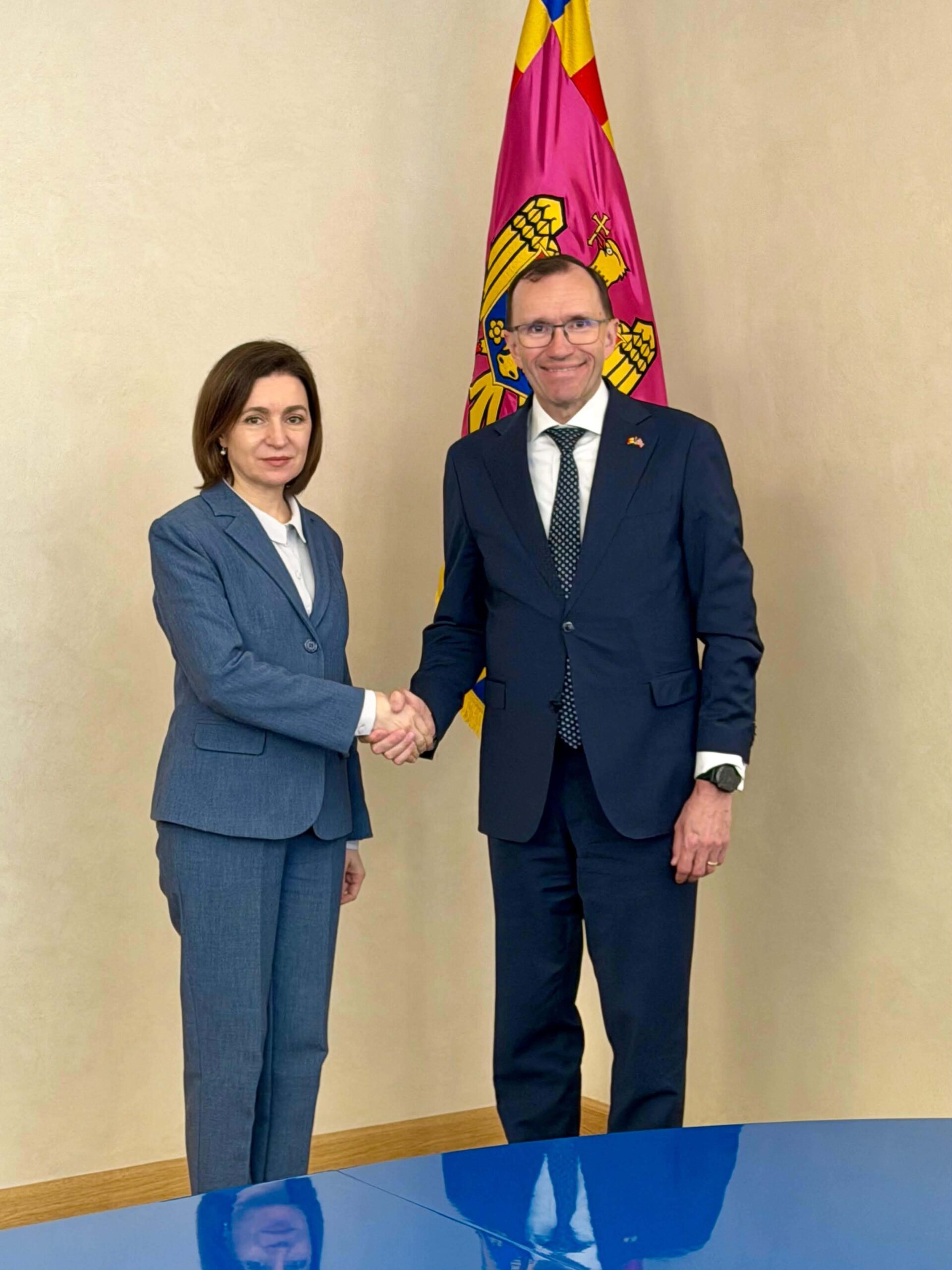
– The Republic of Moldova held the Presidency of the Committee of Ministers of the Council of Europe for six months. How do you assess this presidency, and what has Moldova managed to achieve?
– I think the Republic of Moldova performed very well during its presidency. We worked on establishing accountability for the costs of the war in Ukraine. It was already an ongoing process, but Moldova helped move this issue forward. However, I believe the most important contribution is what Moldova is doing to combat foreign interference and disinformation, considering that it has been one of the countries most affected by this phenomenon. But precisely for that reason, it has also become one of the most effective at fighting it.
Now we all want to learn from Moldova, because this issue—Russian interference, and not only Russian interference in elections—is a European problem and must be treated as such. Therefore, bringing this issue onto the agenda of the Council of Europe is a very logical and welcome step, and we strongly support it. Foreign interference is perhaps one of the greatest threats to democracy, as Russian services are becoming increasingly sophisticated.
– Norway has ranked first in the world in the Reporters Without Borders press freedom index for nine consecutive years. How did you achieve this level? What is the secret?
– I must say that the Republic of Moldova has also made considerable progress. After all, this country was part of the Soviet Union not that long ago. It is truly an impressive journey.
What is the secret? Well, it is about recognizing that the media has an extremely important social role, and that role can only be fulfilled properly if the media is completely free and independent. The media exists to support public discourse, to enable open and free conversations, and to expose abuses of power. And, in fact, that makes us better.
As a minister, you may sometimes be annoyed by an article you do not like, but at the same time I know I want to live in a free country. It also means that if we do something wrong, it will become public, and then we will either have to correct it or leave.
You cannot have genuine democracy without freedom of expression. You can have democratic institutions only in a formal sense, you can count votes correctly, but democracy exists only when people can exchange opinions freely and without obstacles.
It is a very delicate balance. That is precisely why I believe it is very good that the Republic of Moldova is bringing this issue to the Council of Europe, because together we can define standards and principles compatible with European conventions that make it easier to defend democracies against attempts at destabilization.
– When we talk about freedom, we would also like to ask about the fact that the Norwegian government provides financial support to the media. How do you respond to those who say that this makes the media subordinate to the government because it is state-funded?
– That is a good and legitimate question. I think the essential point is that this support must be granted on the basis of very clear and objective criteria.
For example, if you are the second-largest newspaper in a city and you existed long before this system was introduced, we want to ensure that there are multiple media sources. If you meet the objective criteria, you receive support. Nobody in the government judges what you write. It is not as if you receive funding only if you write the “right” things or write in a certain way.
Everything is very transparent and very objective. We also have a national public television and radio broadcaster, but the journalists there are completely independent. Even though the institution is state-funded—because we believe a public media service is important—it operates without advertising, for example, and is credible precisely because it is public. However, editors are entirely free to decide what they publish and manage their work independently.
The biggest challenge facing the media today is that more and more people get their information and understanding of society from social media. I have nothing against social media, of course, but when it becomes the only source of information, the problem is the disappearance of the editor’s role, and information is selected solely by algorithms.
Traditional journalism has principles such as accurately reporting what an interviewee said, without inventing or distorting their words. There is also the principle of the right of reply—if someone is accused, they must have the opportunity to respond. These principles disappear in a world dominated by algorithms.
That is why it is very important to maintain high standards for traditional media—newspapers, television channels, and websites with editorial responsibility—to ensure that there is real dialogue and that people are properly informed. If you rely only on algorithm-controlled media, your own opinions will increasingly be reinforced. Your click history will lead you toward confirmation, not contradiction.
By contrast, when you follow a broadcaster that seeks opinions from both the left and the right, you are exposed to both perspectives. The more the world comes to resemble the one we live in today, the more important it becomes to preserve the role of traditional media. And it is worth investing in that.
– Quite often, including after our investigations, journalists are intimidated. How are journalists protected in Norway?
– I think many journalists face verbal intimidation, especially in comment sections and on social media. However, at the moment it is not a major problem that they are physically assaulted or anything of that sort. Still, it is very important to take a firm stand in defense of independent media and journalists as essential actors in society, and to react strongly whenever these principles are violated.
– Norway is also considered one of the least corrupt countries in the world, ranking fourth in Transparency International’s index. What does this score reflect? How did Norway build such an effective anti-corruption system?
– Even before the modern era, we were a fairly egalitarian society. We did not have very powerful elites. In a way, we became prosperous together, and I think that helped. But again, I believe it comes down to a very high level of transparency and a very strong freedom of information law that allows people to request information from the government.
Both journalists and the public can request access to information. We have strict anti-corruption laws, but also strong and independent institutions that can investigate even at the highest levels and are allowed to do their work. I think that is the key. You need institutions that ensure nobody abuses the high level of trust that exists in society.
We are a society built very much on trust, and there is also a strong sense of honor. I think no politician would want to be caught, not only for legal reasons but also because of reputation and public image. Our society is quite transparent, and it is not easy to hide things. All of that transparency helps enormously.
– What does corruption look like in Norway, and how is it punished? Can you give us some recent examples?
– We have several cases that, in some countries, might not even be considered corruption. For example, a person responsible for public procurement buys services or products from someone with whom they have close ties. It is not necessarily a case where money was exchanged illegally, but the person failed to disclose their connection or closeness to that company or individual.
For example, a conflict of interest. In such situations, you can be sanctioned in different ways—from legal penalties to dismissal from office or cancellation of the contract.
You have to be very strict in such cases. I was Minister of Defence, and the defense industry is a sensitive sector because there is a great deal of secrecy. Very few people make decisions, since it involves the military sector and very large sums of money.
That is why we worked, both in Norway and together with our NATO partners, to develop very strict rules for all these areas. Precisely because we knew that the risk of corruption is always present.
The risks of corruption exist every day, in every country. No country can say, “We solved the problem; it’s over.” We even reached the point of telling people that they cannot accept even a small gift—even something seemingly insignificant, such as theater tickets for themselves and their spouse—if they come from a company with which they have any kind of relationship.
We introduced and enforced these rules precisely to avoid even seemingly minor examples and to send a message that these matters are treated very seriously.
It is not as though you reach first or fourth place in international rankings and then the problem disappears. Every society must work constantly on this issue because temptation will always exist. The important thing is to create a clear conviction that you will be caught and, at the same time, to build a culture in which such things simply are not done.
– Now, as more of a thought exercise, I assume you have heard of Plahotniuc, considered one of the biggest criminals in the Republic of Moldova. He was recently sentenced to 19 years in prison in Moldova because he and his criminal organization stole one billion from the banking system. How would Norway react if something similar happened in your country?
– He would obviously be arrested and punished, just as here, because it is an extremely serious crime, especially on such a scale. But I would like to take this opportunity to say that the fact that he was detained, initially in Greece, and then properly tried and convicted demonstrates the maturity of the system, because we are talking about a very influential person.
This is very important, because if you punish only those involved in minor crimes while people see that the truly powerful remain free, then trust in the justice system declines for everyone.
I think it was very important that this case was handled properly. An example from your eastern neighbor, Ukraine: it is, of course, very serious when there are cases of money laundering or corruption, but it is equally important that Ukraine’s own institutions discovered these cases, brought charges, and sent the people involved to trial. That is how a democratic country should function.
By doing so, you demonstrate that such behavior is not acceptable. And this is important for us as well, those who support Ukraine or support the Republic of Moldova, because we can see that these institutions are actually functioning and fulfilling their role.
– What is the most important lesson we should learn from the Norwegian model? What is the most effective way to combat corruption?
– It is not about the severity of punishment. Of course, there must be fines or imprisonment; there must be sanctions. But I believe that even more important than that is the fairness of the system and the fact that people see that if there is a corrupt individual who continues to walk free and carry on as usual, then public confidence in the justice system begins to fall apart.
On the other hand, if that person is detained, tried, and punished, people gain greater trust in the system. It is about everyday practice. Essentially, we return to what I said about freedom of expression: you need an open and transparent system, strong institutions with sufficient resources to investigate, and those institutions must be politically independent. They are part of the state, but they must not be politically controlled by the government. They must be allowed to do their job. I believe that is the model.
And I am convinced that, from what I see in Moldova’s development, the country is moving in the right direction. At the same time, I understand very well that Moldova was a peripheral part of the Soviet Union, where many of these principles did not exist and where many things were possible. That is why it is not fair to compare the Republic of Moldova with Norway.
We have a much longer history of Western democracy and the rule of law than you do. Therefore, what truly matters is the country’s progress and the direction it is taking. And I believe Moldova is doing many things well.
– Norway shares a border with Russia. Do you consider this a threat? How do you see the future of European security given that Russia is not stopping its war against Ukraine?
– Norway is not a member of the European Union, but we have a special relationship with the EU because, together with Iceland and Liechtenstein, we are part of the European Single Market. We are integrated into the European market even though we are not members of the European Union, so we are very close to the EU.
We all now realize that we are once again living in a much harsher world, one in which wars between states have returned. For many years, we witnessed the collapse of Yugoslavia, the massacres in Rwanda, or terrorism in Afghanistan, but we did not have these classic interstate wars.
Now the situation is different because the largest conventional war in the world today — the war in Ukraine— is taking place right next to your border. And that makes the world more dangerous. And Russia, even after the war in Ukraine, will remain an imperialist and dangerous neighbor for both you and us.
That is why we must invest in defense. But not only in military defense — also in civil preparedness, economic security, and democratic security.
Yesterday I attended the meeting of the B-9 plus the Nordic countries—the states of the Bucharest Nine format, meaning all NATO countries that were once part of the Warsaw Pact or the Soviet Union, together with the Nordic countries. It is essentially a continuous line of NATO states stretching from the Black Sea to the Arctic Ocean. And now we are cooperating more closely than ever because we take this situation very seriously as NATO members.
The message we agreed on yesterday is that we need a stronger Europe and a stronger NATO. What does that mean? NATO must evolve into what we call NATO 3.0—a model in which Europe assumes a greater share of responsibility. Europe must rearm and become more capable so that we depend less on the United States. And precisely for that reason, the United States will remain engaged, because the sharing of responsibilities will be more balanced than in the past.
All the countries we spoke with yesterday agree that we must maintain a strong relationship with the United States while also deepening European cooperation in the field of security. In this very complex world, it is more important than ever to have a strong Europe. And here I am not speaking only about the European Union, but also about countries outside the EU, such as Norway, the United Kingdom, Turkey, Iceland, and Canada.
All of these countries need to cooperate even more closely, and that is beneficial for us, and I believe it is beneficial for the Republic of Moldova as well.
– The Republic of Moldova is the only neighboring country included in the Norwegian Nansen Support Programme. In 2026, Norway allocated 15 billion Norwegian kroner for civil and humanitarian support, as well as investments in energy security, governance, civil society, and Ukrainian refugees. What does this assistance represent? Why does Norway provide this support?
– The Nansen Programme is intended only for Ukraine and the Republic of Moldova. At the same time, for eastern EU member states we have a separate package called the European Economic Area Grants.
Yesterday in Bucharest we signed a €600 million agreement with Romania for the coming years. So we also support Central European countries that are members of the EU. What we are trying to do is connect all these efforts so that we can continue working on the energy security of Ukraine and the Republic of Moldova, which are linked to Europe through Romania.
We are trying to look at all these issues together: energy security, rural development, budget support for the Ukrainian government, and, of course, substantial military support. Why do we do this? Because it is not just aid.
In fact, it is an investment in a safer future for ourselves. We know that it is far better for Norway to live in a world where Putin fails than in a world where Putin succeeds. Fortunately, the war is not taking place in my country, but its effects impact us as well. That is why I want to ensure that the good side wins and that Putin’s attempts to expand westward fail.
We have the necessary resources because we are a relatively wealthy country. Therefore, it is natural for us to take on an important share of this effort. It is also in our own interest, and that is my message to you.
President Sandu and Foreign Minister Popșoi thanked me for this support. Of course, that is a kind gesture. But these are not simple donations. They are, in fact, an investment in a shared future. We know that the good life in Norway—peace, security, and high incomes—also depends on stability around us.
We are a trading nation. Most of what we produce is exported, and most of what we consume is imported. Therefore, it is important to have friends and partners. We need markets, and democracy in Norway depends on the strong defense of democracy in neighboring countries.
We cannot each simply say “Norway first,” “Moldova first,” or “America first,” because that would mean a worse world for everyone. We are stronger together, and democracies must remain united.
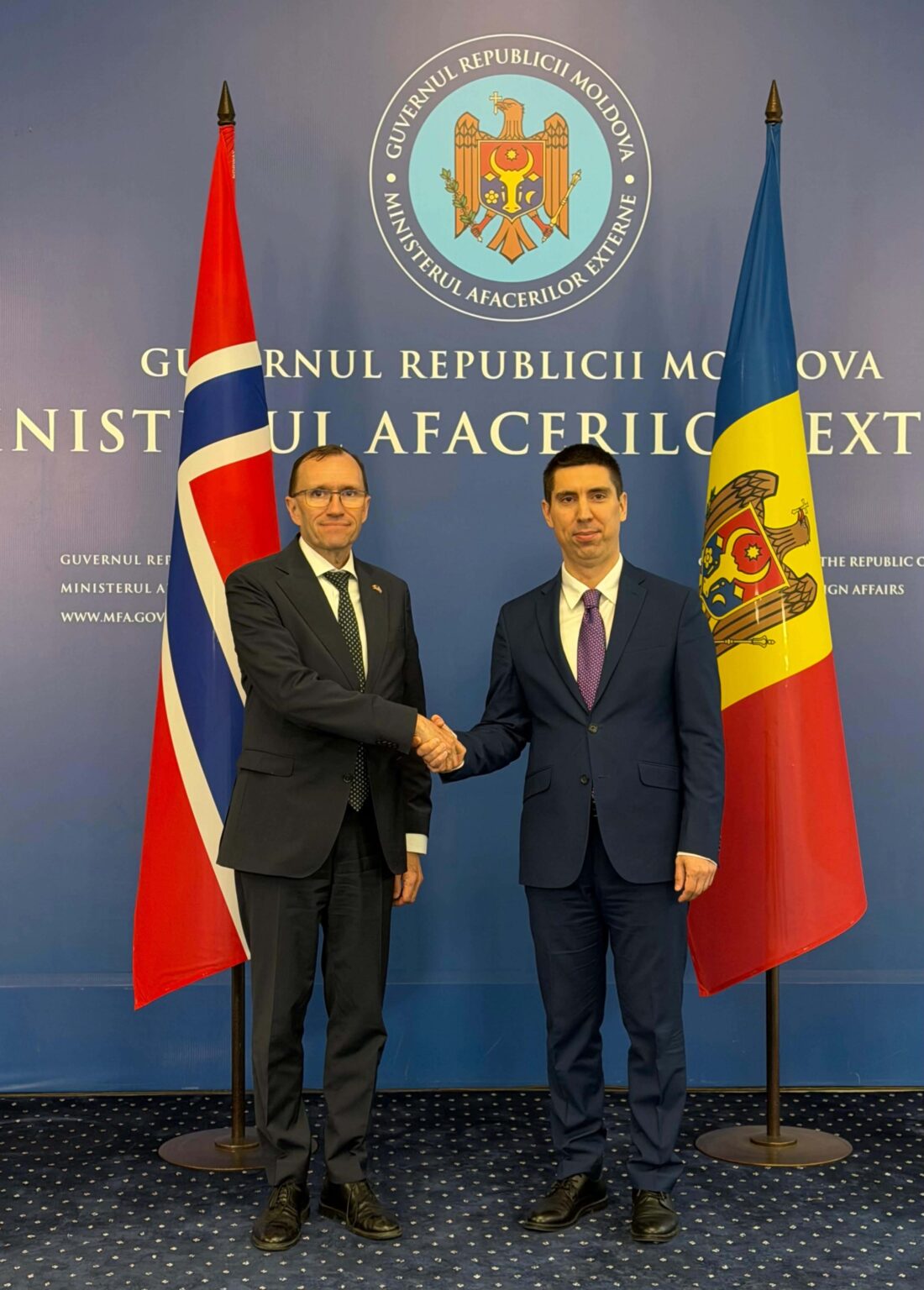
– Norway is often seen as one of the cleanest and most environmentally responsible countries in the world. You invest heavily in green energy. What lesson could countries such as the Republic of Moldova learn from Norway’s environmental model? And why is it so important to invest in clean energy?
– Norway’s electricity production is 100% renewable. One hundred percent.
We do not use fossil fuels at all to generate electricity. Moreover, the share of electricity in total energy consumption is well above 50%, which is very high. In many countries—I believe in the Republic of Moldova as well—electricity accounts for around 20% of total energy consumption, and not even all of that electricity is clean.
Which is understandable, given the context you come from. We achieved this partly thanks to the advantage of hydropower, because we have mountains and abundant rainfall. We can build dams, and that helps us enormously. In addition, we have wind energy. In this way, we developed an energy system based on clean energy.
For example, we use electricity to heat homes, whereas in many other countries gas or other sources are used. We have learned that you can achieve economic growth without causing so much damage to nature. You can have a more circular economy.
You can have stricter environmental protection rules—for example regarding the discharge of chemicals into rivers. I believe we are one of the countries that has demonstrated that paying greater attention to the environment does not make you poorer.
On the contrary, it makes you more efficient. You can do more with less. You can produce more using fewer natural resources. You can produce more while consuming less energy because you do things more intelligently. This is an area where I believe we have experience to offer other countries.
That is precisely why we play an active role in transforming energy systems.
The Republic of Moldova has an energy problem. And, fundamentally, there are two ways to solve it—and both must be pursued simultaneously: produce more energy and consume less. Over time, these two factors will balance each other.
Soviet-style architecture is very energy inefficient. It was not built to save energy but, in practice, to waste it. Modernizing buildings and infrastructure is an area we know very well. Together with the EBRD, we are involved in energy-efficiency programs.
At the same time, we are trying to help the Republic of Moldova become not only more energy independent but also cleaner in terms of energy production. And the good news is that, in the long term, clean energy is cheaper than energy based on fossil fuels. But in the long term, because significant investments are needed at the beginning.