INSIDE MOLDOVA Moldova advances EU accession talks | Government proposes 273 municipalities | Former Victoriabank executive sent to trial in Bank Fraud case


Moldova’s European integration process gained momentum this week as the country received an official invitation to present its negotiating positions for two additional clusters of EU accession chapters. Prime Minister Vasile Tofan held talks with European officials in Brussels on energy security, economic reforms and support for vulnerable households, while the European Commission indicated that Moldova could receive its EU accession roadmap on October 28. Meanwhile, the United States announced $130 million in funding for a new high-voltage electricity interconnection between Moldova and Romania.
Domestically, the government presented a new administrative-territorial configuration comprising 273 municipalities and three regions, while Parliament approved legislation to reorganize the state railway company. Justice-related developments also remained in focus, with former Victoriabank executive Corneliu Ghimpu sent to trial in the Bank Fraud case and a criminal investigation against judge Tatiana Avasiloaie closed. Separately, a ZdG investigation found that only three convictions had been handed down in 42 tax evasion cases examined at the Chișinău Court between 2021 and 2026.
Moldova advances EU accession negotiations as European Commission prepares enlargement roadmap
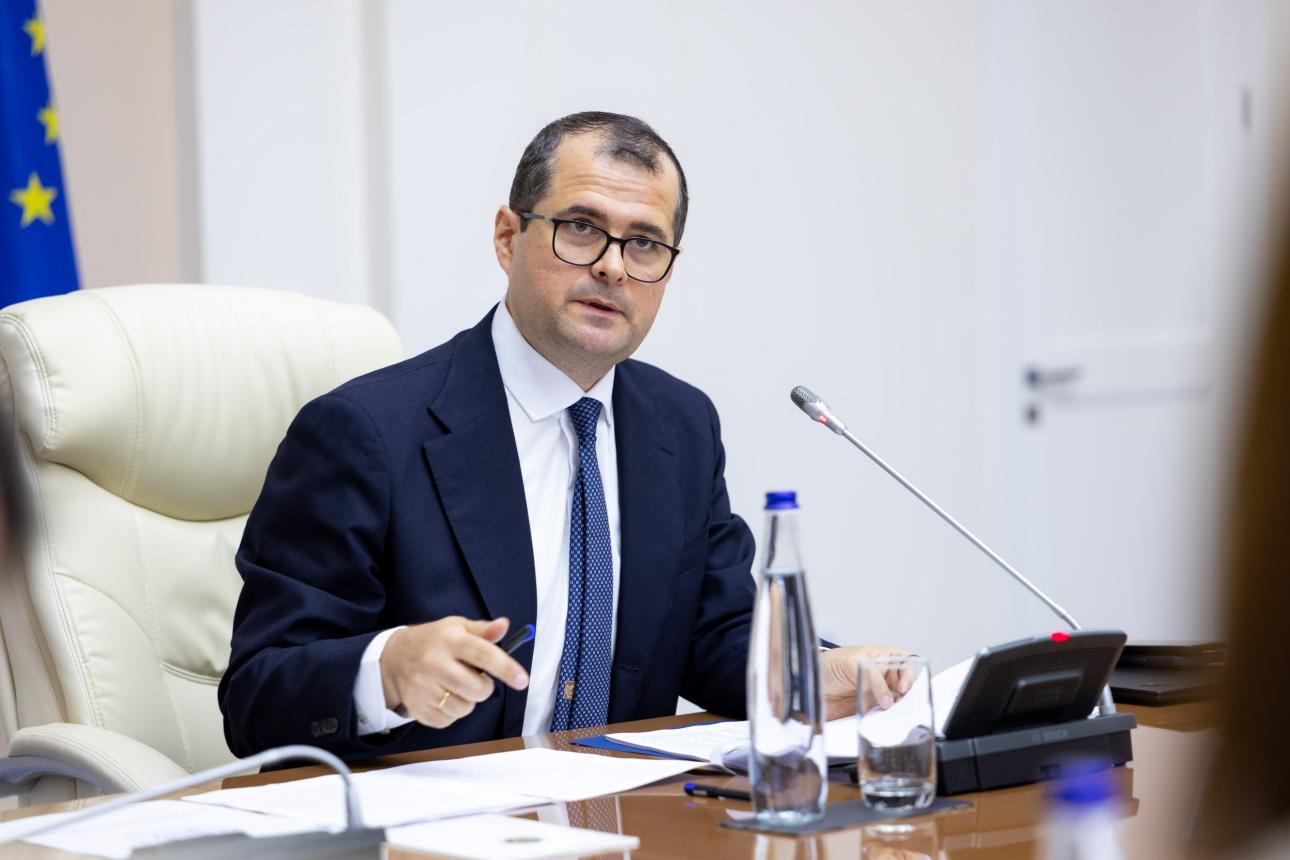
Moldova received an official invitation from the Irish presidency to present its negotiating positions for two groups of EU accession chapters, Deputy Prime Minister for European Integration Cristina Gherasimov announced on October 7. The invitation concerns Cluster 2 – Internal Market and Cluster 3 – Competitiveness and Inclusive Growth.
Meanwhile, Prime Minister Vasile Tofan met several European officials in Brussels on October 5, on the sidelines of the 10th meeting of the Moldova–European Union Association Council. Discussions focused on energy security, regional stability, economic reforms and support for vulnerable households amid rising gas prices. Tofan presented the government’s planned compensation programme and addressed water supply security concerns following severe drought conditions. He reiterated Moldova’s commitment to strengthening its energy resilience and completing technical accession negotiations by 2028.
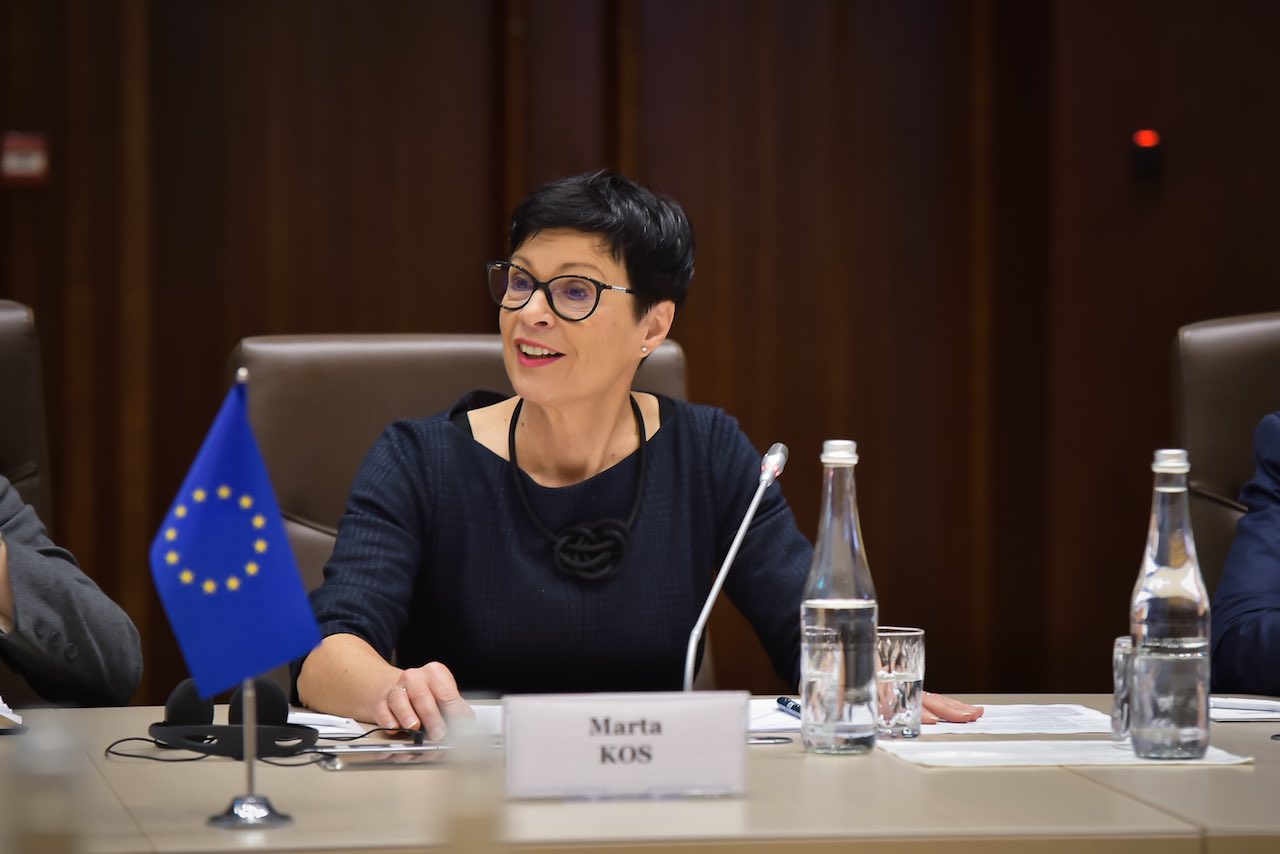
The European Commission also adopted a package reviewing EU policies ahead of future enlargement, outlining the political guidelines and measures needed to prepare the bloc for new members. European Commissioner for Enlargement Marta Kos announced on October 6 that Moldova could receive its EU accession roadmap on October 28.
Separately, Estonia officially opened its embassy in Chișinău on October 5. The inauguration was attended by Moldovan Foreign Minister Mihai Popșoi and his Estonian counterpart Margus Tsahkna, who also met President Maia Sandu during his visit.
The United States announced $130 million in funding for a new high-voltage electricity line connecting Strășeni in Moldova with Gutinaș in Romania. The approximately 190-kilometre project, known as the “Trump Liberty Line,” will include around 70 kilometres of infrastructure on Moldovan territory. The U.S. Embassy in Chișinău announced on October 5 that a working group had been established to prepare the investment.

In another development, the Council of the European Union decided on October 8 to extend individual restrictive measures against those responsible for Russia’s destabilizing activities abroad for another year, until October 9, 2027. The decision follows the continuation and intensification of Russian hybrid activities, including foreign information manipulation and interference targeting the EU, its member states and partners.
Government proposes 273 municipalities and three regions under administrative reform
The Moldovan government presented a new administrative-territorial configuration on October 8, proposing to reorganize the country into 273 municipalities and three regions – North, Centre and South. Under the proposal, Chișinău and Bălți would retain their municipal status, while Taraclia would become a second-level municipality. The Autonomous Territorial Unit of Gagauzia would preserve its special status.
The proposal follows the government’s earlier announcement of plans to replace Moldova’s existing 32 districts with three administrative regions. Authorities also launched an interactive map illustrating the proposed municipalities and regions, allowing citizens to explore the planned administrative changes.
Separately, Parliament approved in the second reading legislation providing for the reorganization of the state-owned enterprise Calea Ferată din Moldova (CFM) into a joint-stock company named CFM-Infra. According to the adopted legislation, the reorganization is to be completed by December 31, 2026.
Chișinău approves electronic ticketing system as public transport prepares to phase out conductors
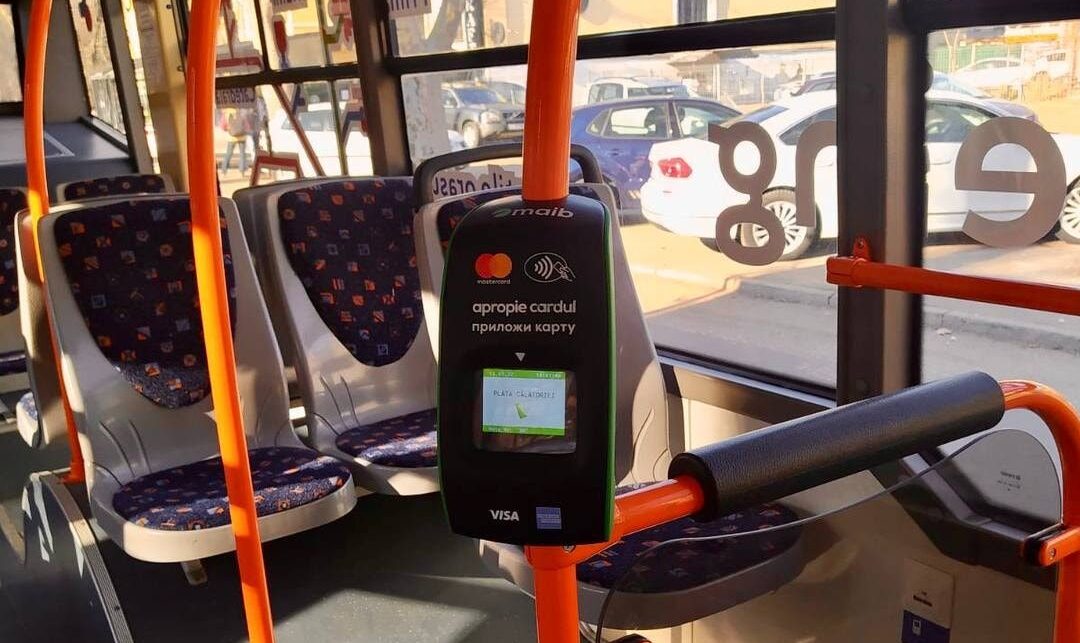
The Chișinău Municipal Council approved the concept of an integrated electronic fare collection system for public transport during its October 6 meeting. The system would allow passengers to pay for journeys by tapping a payment method against an electronic validator, replacing the existing ticket collection process.
Dorin Ciornîi, acting head of the General Directorate for Urban Mobility, said the system would improve transparency in revenue collection, reduce fare evasion and strengthen financial oversight. The transition is expected to take between six and twelve months and will eventually eliminate the role of public transport conductors.
According to Ciornîi, employees currently working as conductors will be offered other available positions within municipal transport enterprises, including ticket inspection roles.
Former Victoriabank executive sent to trial in Bank Fraud case as investigation against judge is closed
Former Victoriabank first vice-president Corneliu Ghimpu has been sent to trial in connection with the criminal case commonly known as the “Bank Fraud,” the Anti-Corruption Prosecutor’s Office announced on October 1. Ghimpu is accused of complicity in large-scale fraud involving abuse of office and organized criminal groups, as well as money laundering allegedly committed through a criminal organization.
According to prosecutors, the criminal organization allegedly led by Vladimir Plahotniuc consisted of several organized groups, including one headed by Ilan Shor. Prosecutors allege that Shor exercised de facto control, through intermediaries, over Unibank, Banca Socială and Banca de Economii, the three banks involved in Moldova’s banking fraud scandal.
Separately, the criminal investigation into Chișinău Court judge Tatiana Avasiloaie, who had been suspended from office in July 2024, was closed on September 8, 2026. The judge was removed from criminal prosecution in the illicit enrichment case and subsequently submitted a request to the Superior Council of Magistracy seeking reinstatement. If the Council lifts her suspension, she will regain the rights previously associated with her position.
The case followed a 2020 ZdG investigation revealing that Avasiloaie regularly accessed an undeclared penthouse of more than 150 square metres in central Chișinău. She maintained that the property belonged to a family acquaintance living on the left bank of the Dniester and that she was merely checking its utilities. Following the investigation, the National Integrity Authority identified a substantial discrepancy of approximately 1.33 million lei between her assets and declared income, prompting prosecutors to open a criminal investigation.
ZdG investigation reveals only three convictions in 42 tax evasion cases over six years
A ZdG investigation into tax evasion cases examined by the Chișinău Court between 2021 and 2026 found that only three of 42 cases resulted in convictions, while 19 defendants were released from criminal liability because the statute of limitations had expired.
Of the 42 judgments identified by ZdG, only 34 were publicly available. The investigation found that just one defendant who pleaded not guilty was ultimately convicted, with the sentence handed down in 2026. In another case, the defendant concluded a plea agreement, while a third was examined based on evidence collected during the criminal investigation after the accused admitted guilt.
The findings also showed that only one company was held liable in the three cases resulting in convictions, raising questions about the effectiveness of criminal proceedings in tax evasion cases and the impact of lengthy judicial procedures.
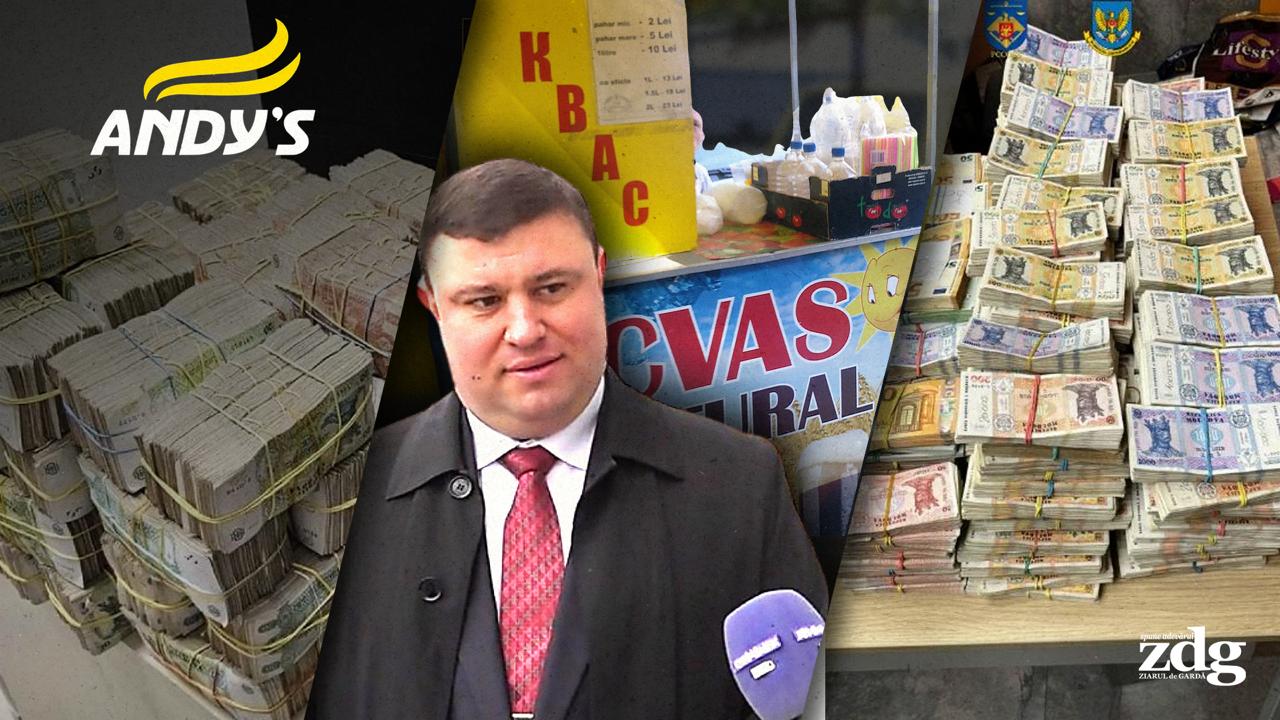
Petrocub plans 11 million lei stadium renovation amid scrutiny over links to Chișinău mayor’s family
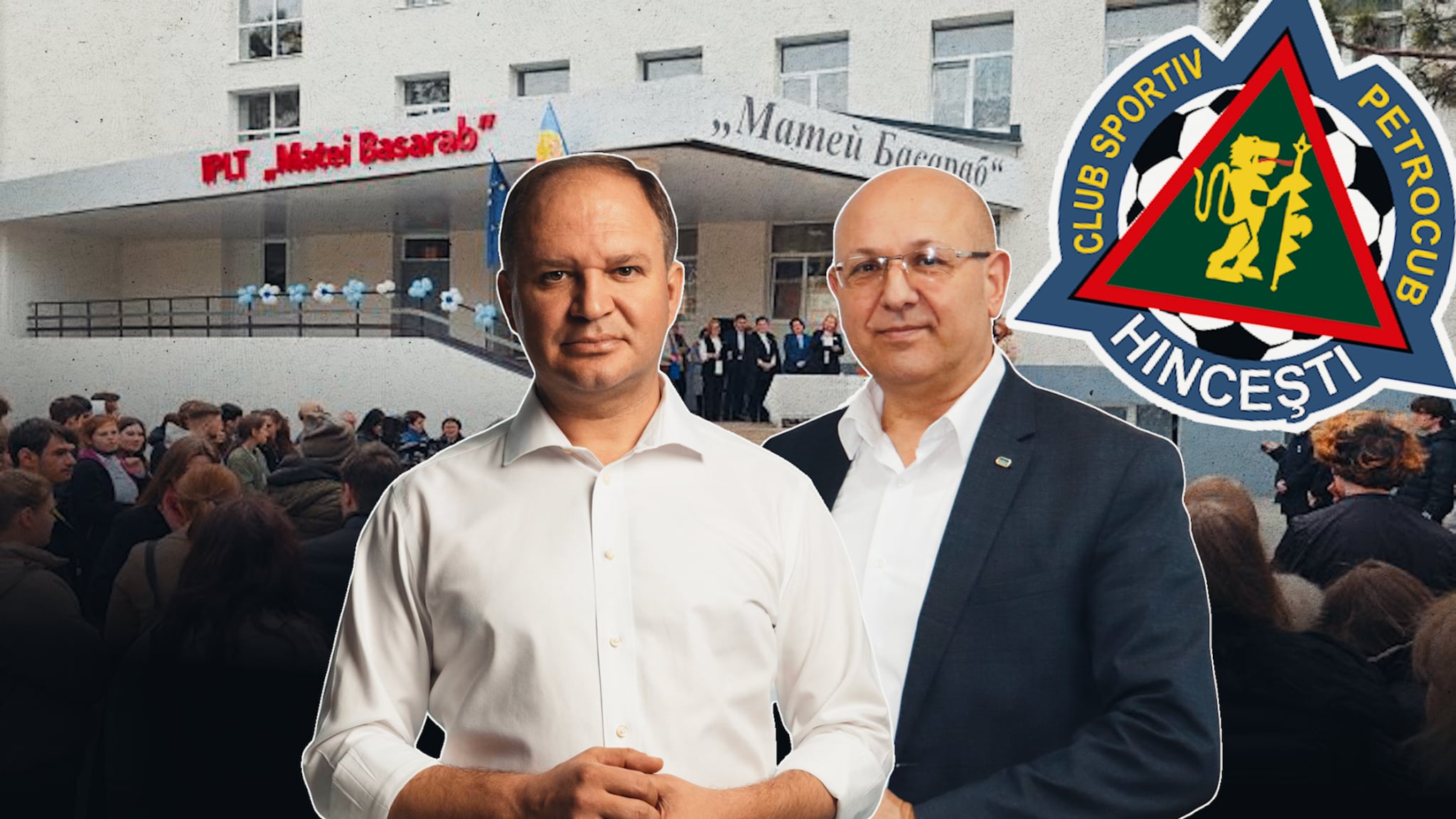
Football club Petrocub plans to invest 11 million lei in renovating the stadium of Matei Basarab Theoretical High School in Chișinău. In exchange, the school has agreed to grant the club free access to the artificial football pitch, changing rooms and sanitary facilities for an initial period of five years, with the possibility of extending the agreement.
The arrangement has attracted attention following ZdG’s findings that Ghenadie Țaulean, the father-in-law of Chișinău Mayor Ion Ceban, represented Petrocub during the authorization process. Țaulean previously worked for the International Association of Road Hauliers of Moldova (AITA), including during the period when the association was headed by Mihail Usatîi, Petrocub’s honorary president.
Andrei Pavaloi, deputy head of Chișinău’s General Directorate for Education, Youth and Sports, dismissed concerns that the arrangement could lead to the stadium’s privatization. In a Facebook response, Ceban said his father-in-law was an ordinary employee earning a gross monthly salary of 6,300 lei and had no involvement in the club’s management or administration.