ZdG documentary on 35 years of Russian influence in Moldova screened for foreign diplomats in Chișinău
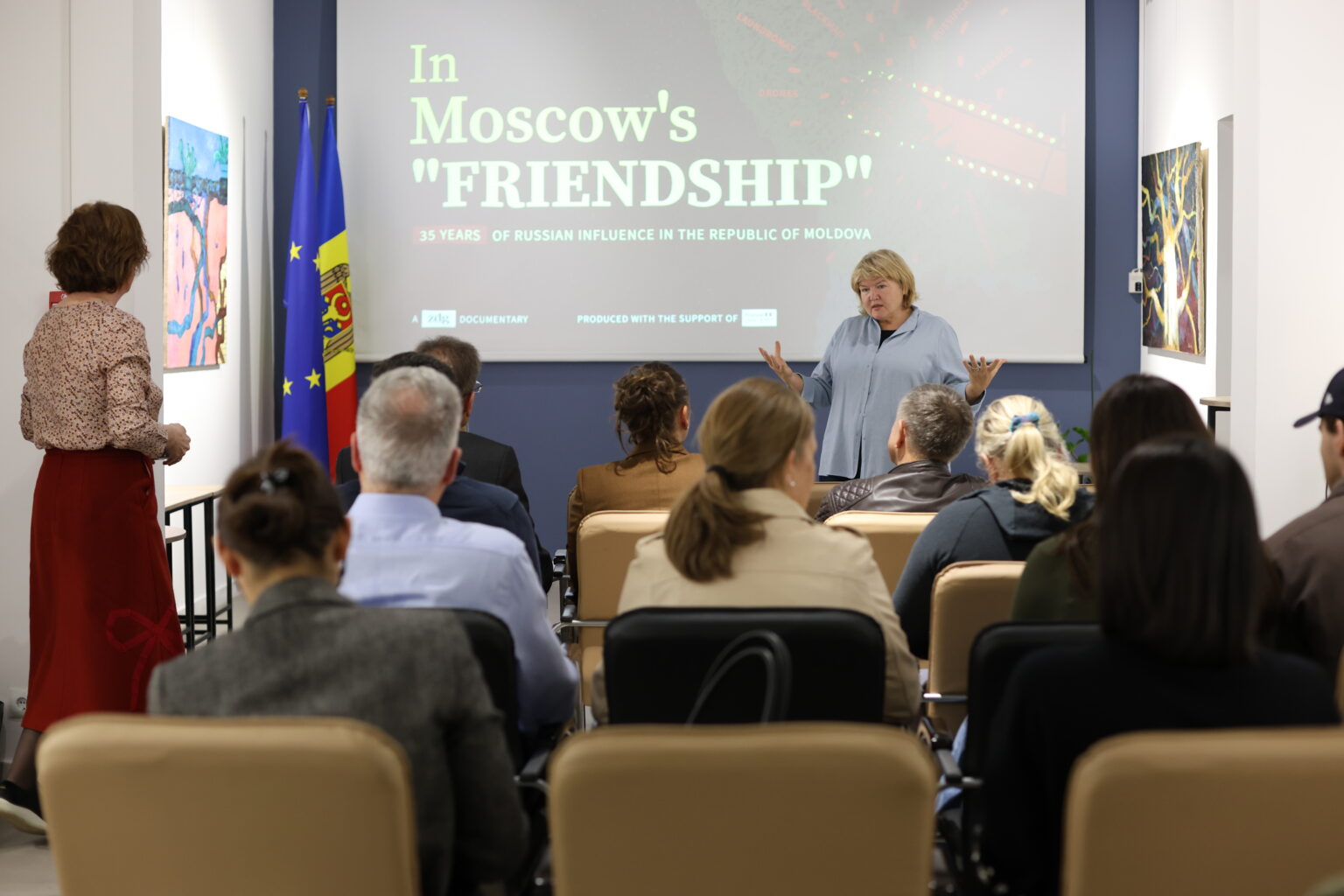

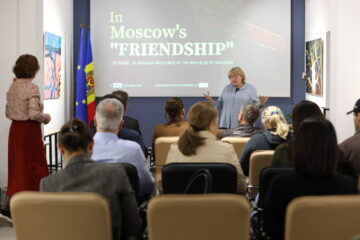
Ziarul de Gardă’s documentary “In Moscow’s ‘Friendship’: 35 Years of Russian Influence in the Republic of Moldova” was screened with English subtitles on October 16 and 22, 2026, at the European Union Information Centre in Chișinău, Europe Café. The screenings brought together foreign diplomats and representatives of international organizations to discuss Russia’s influence in Moldova, the historical events presented in the film and ways to counter disinformation.
Representatives of the embassies of Denmark, Estonia, the Czech Republic, Spain, Sweden, Ukraine, the United Kingdom, the United States, Norway, France, Japan, Germany, Austria and Romania attended the events, alongside representatives of the EU Delegation and international organizations, including AID, EUPM and UN Women.
Among the participants were Iwona Piórko, the European Union Ambassador to Moldova, and Liliana Vițu, Director of the Centre for Strategic Communication and Countering Disinformation (StratCom).
Following the screenings, participants discussed the documentary with its author, Alina Radu. The October 16 discussion, moderated by foreign policy expert Daniel Vodă, also addressed the selection of the film’s protagonists, filming locations and behind-the-scenes stories.
“An extraordinary history lesson”: Diplomats react to the documentary
EU Ambassador Iwona Piórko said she was deeply impressed by the documentary and encouraged more people to watch it.
“I am deeply, deeply impressed. It is an extraordinary history lesson, truly incredible. This is a documentary that will stay with me for a long time, and I believe that very, very many people should watch it,” Piórko said, congratulating Alina Radu and the ZdG team.
Denmark’s Ambassador, Soren Jensen, noted that the film could help the international community better understand Moldova’s geopolitical challenges. He also mentioned “Uncovered,” a theatre performance dedicated to investigative journalists, and “Plaha,” a series exploring corruption and oligarchic influence in Moldova.
Samuel Richard, First Counsellor at the French Embassy, praised the documentary’s emotional impact and highlighted the importance of freedom, including the right to speak one’s own language. He also questioned how documentaries about territories formerly controlled by Moscow could help combat disinformation.
Spain’s Ambassador, Francisco Aguilera Aranda, asked whether the film could help unite different segments of Moldovan society.
Alina Radu explained that the documentary attempts to trace Russia’s efforts to influence Moldova’s democracy over 35 years, including through the war on the Dniester River, the occupation of 11% of Moldova’s territory, the continued presence of Russian troops, political corruption, money laundering, the denial of Soviet deportations, information warfare and influence over religious institutions.
She argued that examining these actions could provide a starting point for dialogue among different groups in society about national security, defence and resilience against external threats.
Shared historical experiences: Soviet deportations and the struggle for freedom
Several diplomats drew parallels between Moldova’s history and their countries’ experiences under Soviet rule.
Estonia’s Ambassador, Siiri Konigsberg, said scenes from the documentary reminded her of Estonia’s struggle for freedom, Soviet deportations and subsequent Russian interference.
Jüri Kahn, an Estonian diplomat and former ambassador, expressed surprise that Soviet deportations appeared less widely known in Moldova than in Estonia or Lithuania.
“Almost every family had someone, a relative or a close person, who had been deported to Siberia during the Soviet period,” Kahn said, expressing hope that the documentary would raise awareness of these events.
Mykola Turyk, a representative of the Ukrainian Embassy, said he recognized the methods of Russian “friendship” depicted in the film, noting that similar tactics had been used against Ukraine for years.
Liliana Vițu, Director of StratCom, highlighted the emotional impact of testimonies about Soviet deportations and the ways historical trauma continues to affect society.
“It is not just an account of the past, but also an explanation of why we still carry these wounds and why they continue to be exploited by those who do not wish us well,” Vițu said.
Delia Tudor, Secretary at the Romanian Embassy, described the documentary as “a very powerful tool for bringing the truth to light,” noting that such productions help audiences understand the actions and intentions of external actors, even when historical events cannot be viewed simply in black and white.
Independent journalism and the challenges of exposing Russian influence
The discussions also addressed investigative journalism’s role in exposing foreign interference and disinformation.
Liliana Vițu referred to ZdG’s investigations into networks associated with Ilan Șor and attempts to influence Moldovan elections, emphasizing their importance in helping citizens understand how such networks operate.
Austria’s Ambassador, Martina Hermann, highlighted the documentary and ZdG’s investigation “The Kremlin’s Digital Army” as examples of reporting that reveals Russia’s methods of influencing Moldova, including through social media.
She asked how the newsroom manages to continue its work under the current circumstances.
Alina Radu described the threats and pressure faced by ZdG journalists, including official letters from Russian authorities demanding the removal of articles about the war. She said the ZdG website was subsequently blocked in Russia, forcing readers there to use VPNs to access its reporting.
How can Moldova and Europe counter Russian influence and disinformation?
During the second screening, ZdG asked several diplomats how Moldova and Europe could counter Russian influence and disinformation.
Germany’s Ambassador, Hubert Knirsch, emphasized the importance of critically evaluating information and considering different perspectives.
“I believe we can counter external influences and any other forms of negative influence that certain individuals or groups try to exert on us through a constant effort to stay properly informed,” Knirsch said, encouraging dialogue and openness to different opinions.
Yoshino Naito, a representative of the Japanese Embassy, stressed the need for a “solid foundation” of civil society capable of resisting external interference as manipulation techniques evolve.
Norway’s Ambassador, Anne Kjersti Amundsen, also emphasized the importance of an informed, engaged public and a civil society “strong enough” to withstand external influences.
Ross Elliot, Defence Attaché at the British Embassy, highlighted the need for better communication between authorities and citizens.
Elliot argued that officials should “get out of Chișinău” and engage directly with communities throughout Moldova, rather than concentrating their efforts on the capital.
Referring to the United Kingdom’s experience with Brexit, the British Embassy representative noted that insufficient communication between authorities and communities in different regions had been one of the challenges observed during that period.
The discussions emphasized the importance of independent journalism, stronger civil society, critical thinking and direct communication with citizens in countering disinformation and external interference.
A documentary marking 35 years of Moldova’s independence
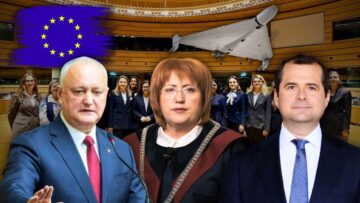
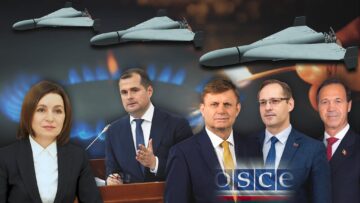
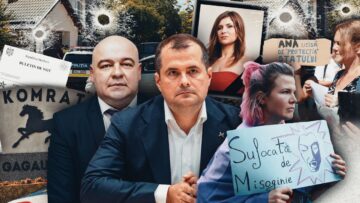
“In Moscow’s ‘Friendship’: 35 Years of Russian Influence in the Republic of Moldova” examines Moscow’s efforts to maintain its influence over Moldova since the country declared independence from the Soviet Union in 1991.
Through historical events, testimonies and documented cases, the film explores the consequences of Russian influence on Moldova’s politics, security and democratic development.
Foreign policy expert Daniel Vodă highlighted the public interest generated by the documentary, pointing to the full screening room at its premiere and the numerous questions and testimonies shared by the audience.
At the time of the discussions, the film had accumulated more than 140,000 views and over 470 comments on ZdG’s YouTube channel.
The documentary premiered on August 26, 2026, at the Odeon Cinema in Chișinău, ahead of Moldova’s 35th Independence Day. It was subsequently published on Ziarul de Gardă’s YouTube channel.
Produced by the ZdG team with the support of Expertise France, the documentary’s two English-subtitled screenings provided an opportunity for international representatives to reflect on Moldova’s history and discuss the challenges of countering disinformation and strengthening democratic resilience.