How do we prepare children for the future? An interview with the director of Heritage International School
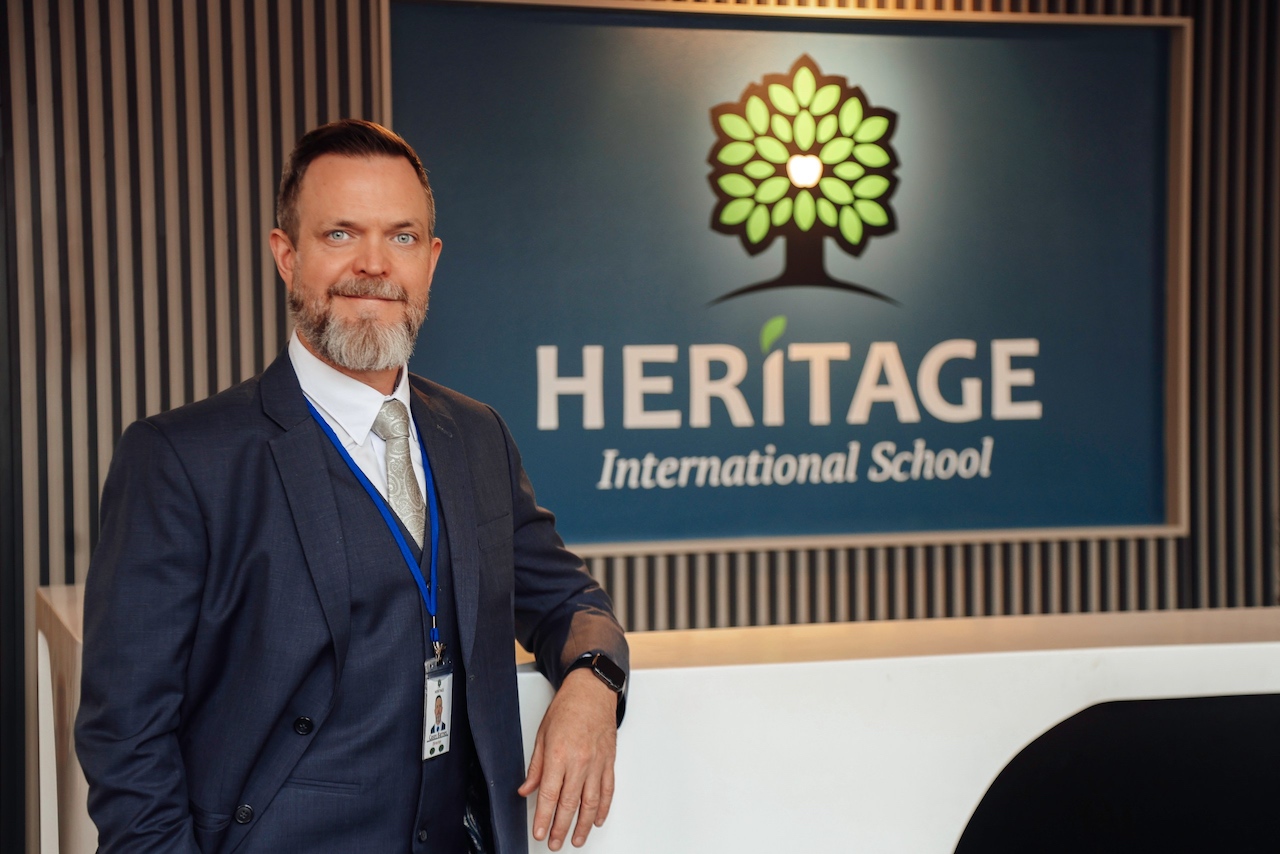
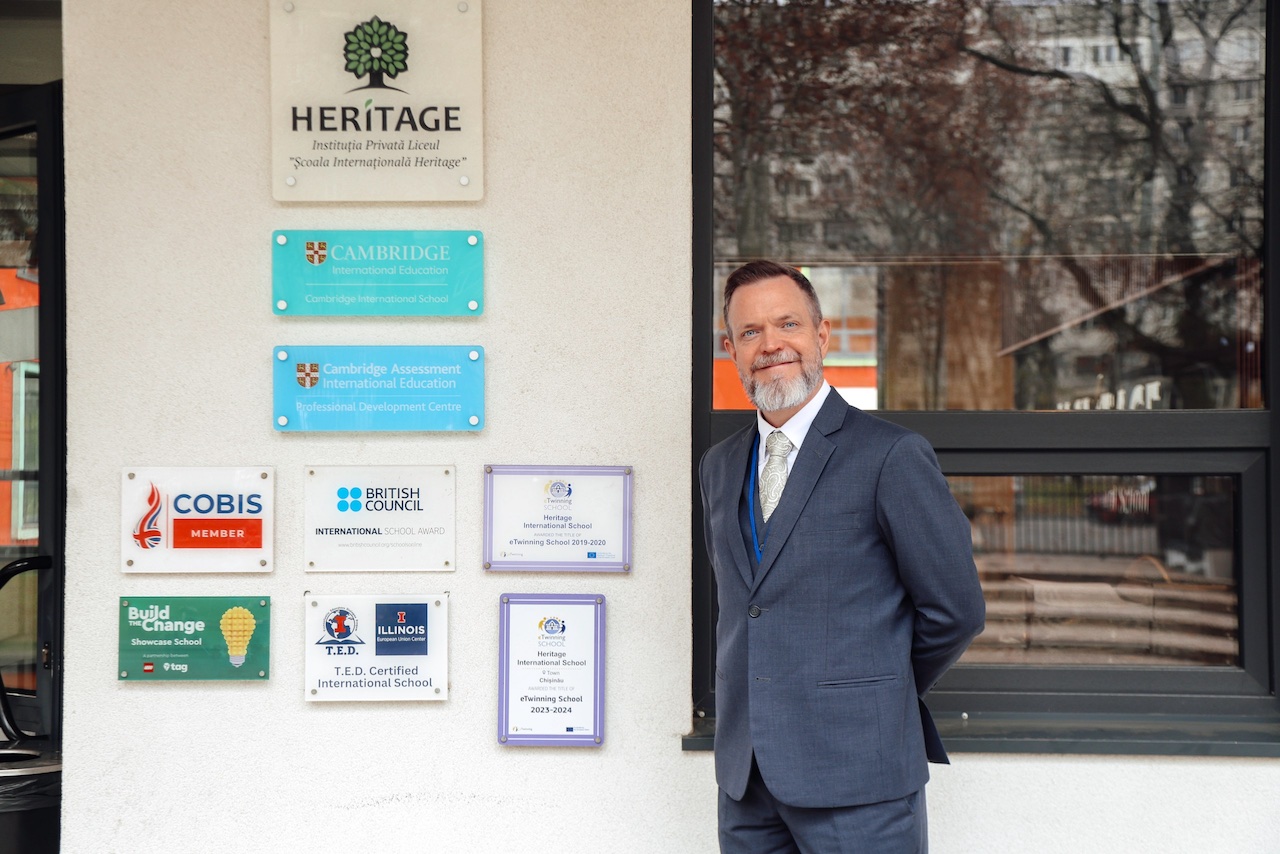
Trust, community, communication — these are the values of the new director of the Heritage International School. Casey M. Barnes has always been in education in different forms and in different geographical areas: from outdoor education, specifically teaching sailing, in the United States and in the Caribbean Sea, to teaching in public or private schools and universities in South Korea, Vietnam, Russia, Uzbekistan and Thailand. This vast experience shaped his philosophy of education, which is “everyone learns by doing.”
So far, being in Moldova for the last couple of months has been a positive experience. He found a great fit in Heritage, where he fully aligns with the mission, that of preparing students for the future. In this interview you will get to know Casey Barnes, his vision on education in the 21st century and how he will balance tradition and innovation in education.
Coming to Moldova
— What surprised you the most when you arrived in Moldova—either positively or negatively?
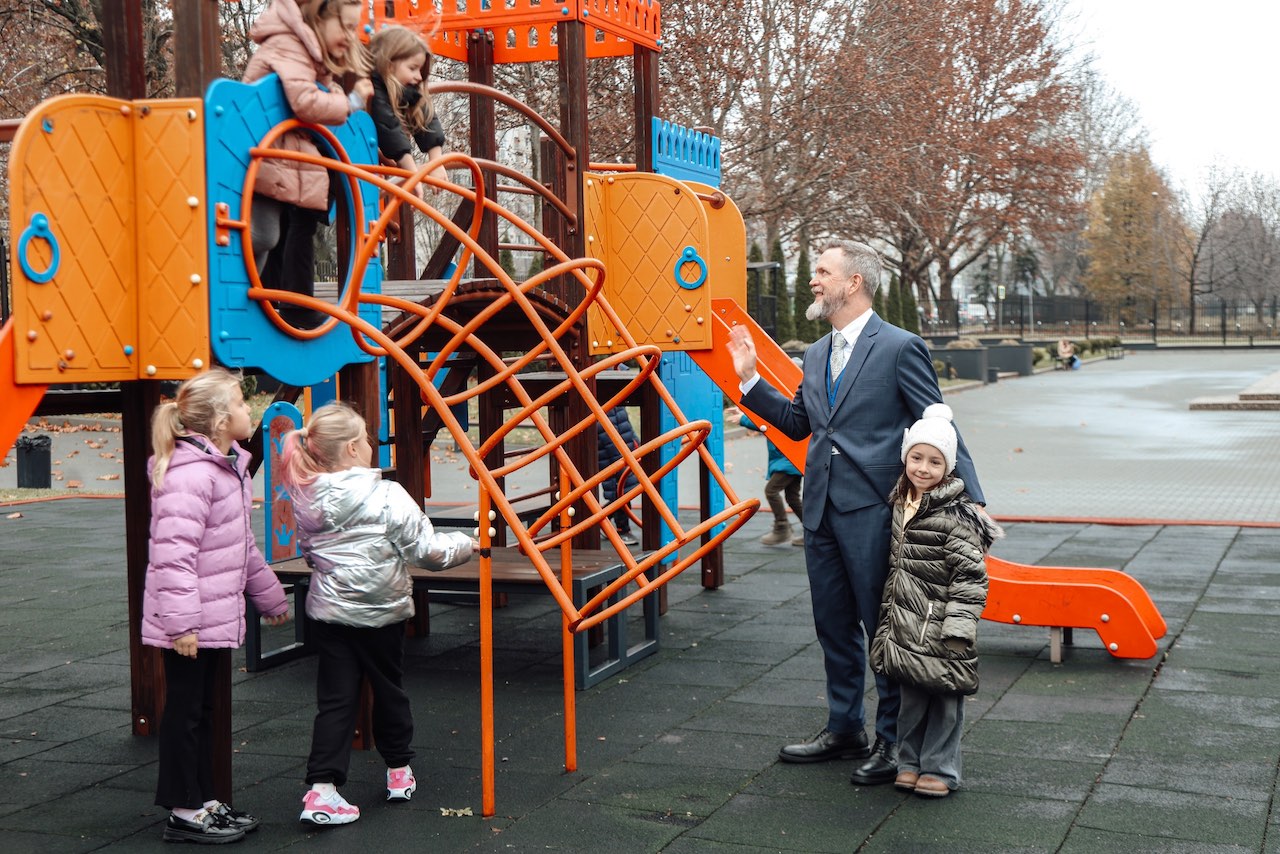
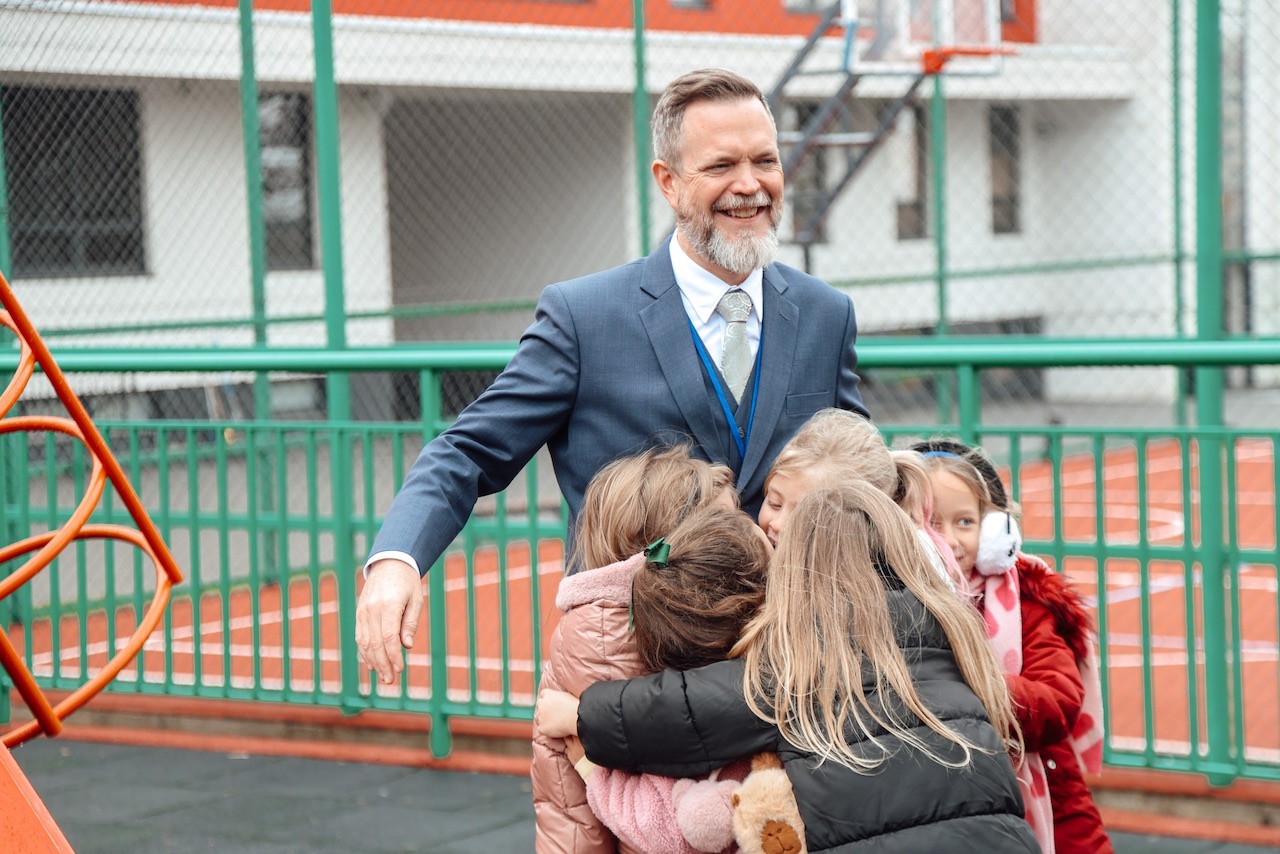
— I stand at the school gate every day, and it is inspiring to see how close our families are, how they’re holding hands, walking up to the school, they’re hugging each other to say goodbye for the day. It looks like they’re not going to see each other for months. It looks like they’re at an airport, and yet this is just a few hours that they’re being separated for. I find it remarkable.
— What lessons from your previous experience are you bringing to Moldova?
— I’ve worked in a lot of different environments with a lot of different socio-economic groups, as well as a very diverse range of learners, ages, purposes for learning, and the thing that I’ve learned is kids are pretty much the same everywhere.
There’s not a great amount of difference in how kids learn, why they want to learn, what they like about school. You ask a student anywhere in the world what they like about school, you’re going to pretty much get the same answers and it’s really interesting to think about how diverse our world is, and yet there are some universal consistencies among all kids.
Students in 2025
— What fascinates you about today’s students, and what worries you?
— They’re so connected, and they’re so underwhelmed by that connection. The fact that they can go home and play a game and converse with someone from another nation, in another time zone, in another hemisphere, who’s just playing the same game with them, and they’re collaborating on whatever project is in the game. It’s mind-blowing.
What worries me is no different than what’s worried every generation. I think we share something about our perception of youth and our care for society, and I think it’s multi-generational. You know the first person we have on record who basically said: “Oh, kids these days,” was Aristotle.
Mulțumim că citești ZdG!
Ajută-ne să continuăm să furnizăm informații esențiale — donează pentru jurnalismul nostru.
So there’s nothing new there and that concern is simply: are we contributing enough to creating a generation that is empathetic and that will contribute to their communities in a productive way? Are these children going to grow up and vote the right way? Are they going to create the societies that we wish we had worked harder to create ourselves?
— What does success mean for a student, in your view? And how can we measure it without reducing everything to exams?
— It (success) means they have all the skills and all the attributes and all the knowledge to be able to take that “next step.” It means they have enough knowledge and they have enough of that risk-taking attitude. They have enough confidence that they’re willing to take that leap into whatever their next step is. Success is “I am ready and willing, even though I’m a little bit scared, but I’m ready and willing to take that next step and I’m confident that I will be successful in that next step because of the foundation that I have’’.
About Heritage
— What makes Heritage different from other schools?
— Heritage is the only Cambridge-accredited school in the Republic of Moldova. It offers two educational pathways: the Bilingual Pathway, which combines the national curriculum with the Cambridge curriculum (with instruction in Romanian or Russian plus intensive English), and the Cambridge Pathway, which follows the full Cambridge curriculum taught entirely in English.
Students in the Bilingual Pathway take the mandatory national exams in Grades 4 and 9, while those in the Cambridge Pathway sit Cambridge exams — Primary Checkpoint, Lower Secondary Checkpoint, IGCSE, and A Level — all administered at Heritage, an approved Cambridge examination centre.
This educational model gives students the opportunity to obtain globally recognised qualifications, opening doors to any university of their choice in the Republic of Moldova, but also to over 1,400 universities worldwide in 195 countries.
Beyond academic rigor, Heritage prioritises the holistic development of students: its international teaching team creates an interactive and stimulating multicultural environment.
Students benefit from a rich extracurricular programme — including LEGO Education clubs, robotics, music, sports, volunteering, and more — enabling them to develop not only cognitive skills but also emotional intelligence, resilience, and a strong sense of civic responsibility.
Additionally, the Heritage Scholarship Programme offers talented students in Moldova the chance to receive a full or partial scholarship for international education, reflecting the school’s commitment to equal opportunities and the development of the local community.
— The Heritage motto is “Preparing students for the challenges of the future.” What challenges do you think today’s students will face in the future, and how are you preparing them for that?
— What I keep in mind is that kids starting school this year will probably retire in the year 2100. What is the world going to look like in the year that they retire from work? What kind of work will they be doing? We have a hard time envisioning what the world will be like in five years from now, let alone in 2100 when these kids are going to be retiring.
So, the focus of our team, as well as the vision of Heritage’s founders, is to emphasize the development of essential values and skills for the future. We prioritize community, integrity, self-confidence, digital literacy, social literacy, and critical thinking, believing that these abilities and values are fundamental for preparing students to face the challenges of an ever-changing world and to become responsible, creative, and adaptable citizens.
— What does the term “Heritage community” mean to you?
— It is the safety net that allows children to be risk-takers. I think risk-taking is a really important part of growing up, whether it’s social risk-taking, whether it’s academic risk-taking. And we know that risk-taking is a very important part of the learning process also, but there needs to be a safety net there. I always tell parents, when we talk about the homeschool partnership, the community partnership and I always say when the school and the community hold hands, there are no cracks for kids to fall through.
At Heritage, we have a large community of over 700 families, which for a vibrant ecosystem. In our volunteering projects, students work together with their peers, parents, and teachers to organize donation drives or activities benefiting the local community, and these experiences teach them responsibility and collaboration. Within clubs and extracurricular activities — from robotics to debates — students support each other and share ideas, learning to be curious and creative in a safe environment. Additionally, parents are constantly involved, whether by attending school events or participating in workshops and meetings with teachers, which strengthens the sense of belonging and mutual support. All these examples demonstrate the power of the Heritage community. When students, teachers, and parents collaborate, we succeed not only in building academic achievement but also in fostering values, self-confidence, and essential social skills for life.
— In a recent statement, you mentioned that you bring “a global perspective and a deep understanding of cultural and educational diversity.” How does that translate into concrete actions you plan to take at Heritage?
— The project I’m most interested in is creating evidence of our school values, our learner attributes, and our school mission in action and what that means is: what is a Heritage learner? What specifically do we want our students to have in terms of skills, attributes, values, as they move through the school and how those develop and change?
One of my goals is to create a portfolio system where students are collecting evidence, reflecting on that evidence, and developing themselves so they can actually see if community is a value of ours, if respect for tradition is a value of ours, which it is, how does that manifest in our students’ lives? And how can they develop a concrete example of how they display that? How does that change throughout the years as they get older?
We simply need to gather it and make it a reflective and iterative process. So, in terms of concrete changes related to specifically global perspective and cultural and educational diversity, I think the learner attributes, values, and mission in a portfolio format that students could even later use, this could end up being used towards their university admissions too.
About teachers
— Describe the portrait of a modern teacher. How do you recognize a good one?
— I believe they need to be really strong professional relationship builders. We talk so much about new technologies, AI connections, AI friends, all kinds of things happening, and genuine human relationships are what people seem to be really caught up in. And I think that that is a huge part of teaching in this century now.
So good professional relationship builders and good at putting classroom structures in place. I still believe, maybe it is the traditionalist in me, I believe that students like processes and procedures. I think that they like to know what they are supposed to do. I believe every time some child has some kind of misbehavior, something minor, it is usually because they didn’t know what they should be doing at that time.
Students like to know what to do. The best learning happens when kids know what to do and how to do. And that’s where creativity comes from. You know, every artist will tell you art is a process. Well, that means it’s a procedure. That means that there’s structure to art. And I think that’s what functional classrooms look like, too.
Strong relationships, strong structures.
When I was teaching before, people would often ask me, what are your classroom management strategies? How do you enforce your classroom rules? How do you deal with a misbehaving student? And I said very honestly, I don’t really have that problem because I build strong relationships with my students very early on: I encourage them, I make them want to be in the classroom. I make them proud of themselves. I make them want to be better.
One of the most important interview questions I’ll ask a teacher is, what do you love about learning? And I want to see passion. This is a labour of love. Although I don’t like using that expression, but it is work that requires effort and resilience. It is work that is not easy. It is work that is dynamic. And I’ve always said you never have two of the same days in education and that is true. In order for humans to manage under those conditions, you really better love what you do.
— What has no university ever taught you about leading a school, something you learned only by doing it?
— I would say it would be the power of consistency and the power of small gains. You can get lessons like this from James Clear’s book, Atomic Habits, but there’s nothing really new about that. Doing something consistently over a long period of time contributes to other aspects of your working life and it contributes to your social life. Just this morning I was at the gate and a student commented, they said: “It’s so nice, I know you’re going to be here every morning,” and that was actually quite powerful.
Preparing children for the Future
— Tradition in education or innovation and technology?
— I think learning has always been about a balance of both. Any time you have learning we have a situation where there is an age gap and an older generation is imparting knowledge, experience, and life skills onto the younger generation. Well, tradition is going to be a part of that. It’s inextricable. But because you’re working with the younger generation, innovation, and new technologies are going to be a part of that because you are trying to prepare them for some kind of future and they need to be able to use this, whether it’s a strategy or whether it’s actual hardware. In education, these two things always work together.
— How are technologies integrated into the learning process at Heritage?
— At Heritage, technology is fully integrated into the learning process to enhance both teaching and student engagement. Classrooms are equipped with interactive smart boards, projectors, and audio-visual tools that allow lessons to be dynamic and visual, supporting different learning styles. Students use tablets and laptops for research, collaborative projects, and creating digital presentations, while teachers incorporate online simulations, educational apps, and virtual labs into lessons.
We also have robust online platforms that connect students, teachers, and parents: grades and assignments are updated in real time, homework and learning resources are shared digitally, and teachers can provide timely feedback. Students collaborate through online discussion boards and digital portfolios, reflecting on their learning and tracking their progress. Technology is not just an add-on — it is embedded into every stage of learning, from classroom instruction to independent research, fostering creativity, critical thinking, and digital literacy in a practical, everyday context.
— How do you define an educational leader in the 21st century?
— I think about what are the real attributes that any leader now needs, especially someone trying to lead a school, and empathy is a huge one. I don’t know if empathy is something that can be developed or if it’s natural, but I think it’s absolutely needed.
I think that one has to be a lifelong learner. You have to continually develop. You simply can’t stop. Every day there has to be targeted learning towards a better understanding of humans, of learning, of systems and I mentioned community, I think having an understanding of the importance of community and how a supportive group of people is where children flourish.
More about Heritage International School: www.heritage.md