David Smith on ZdG documentary: Russia has spent 35 years trying to keep Moldova poor and under its control
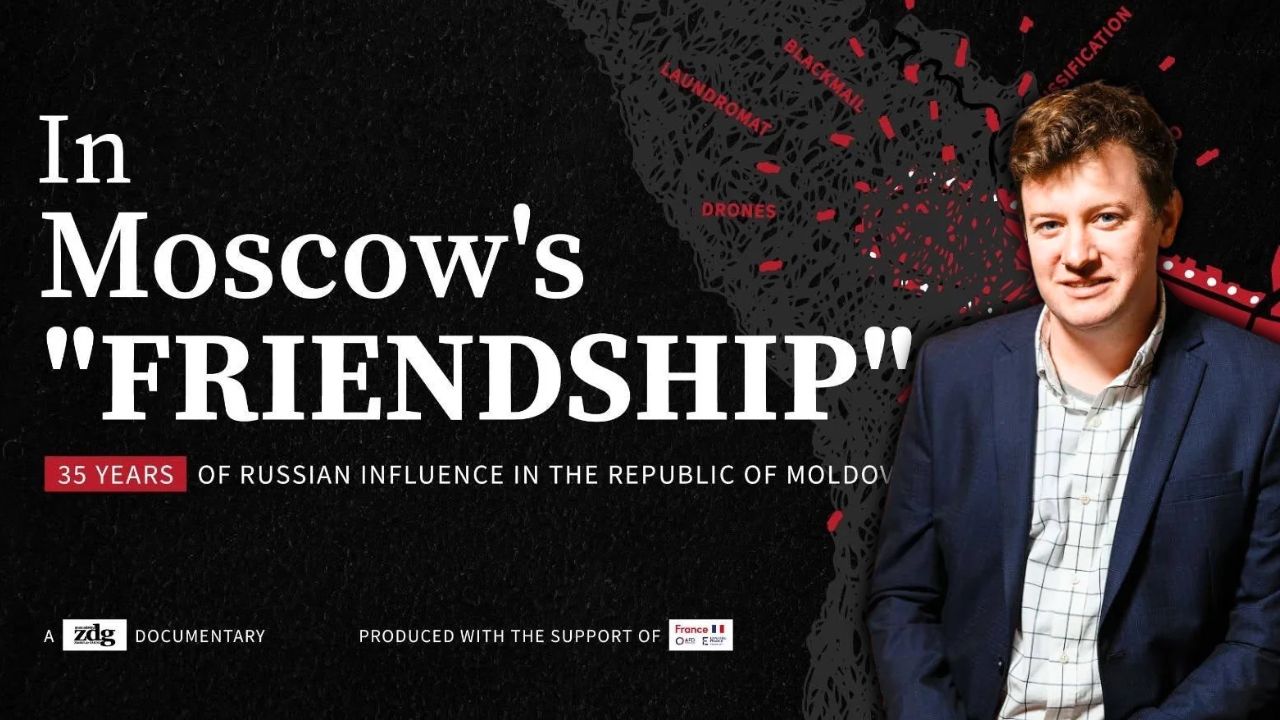

For the past 35 years, Russia has sought to prevent the Republic of Moldova from becoming a free and independent state, using war, economic embargoes, corruption, and disinformation. This is one of the conclusions drawn by David Smith, author of the Moldova Matters newsletter, in an editorial published on Monday, November 2, analyzing Ziarul de Gardă’s (ZdG) documentary, In Moscow’s “Friendship.”
The editorial, titled “Poorest Country in Europe (by Design),” describes ZdG’s documentary as a retrospective of Moldova’s 35 years of independence and the Kremlin’s repeated attempts to maintain its influence over the former Soviet country.
According to Smith, the 1992 Transnistrian war, economic embargoes, the money-laundering operation known as the “Russian Laundromat,” and disinformation campaigns should not be viewed as isolated events, but rather as parts of a continuous Russian effort to prevent Moldova from achieving genuine independence.
However, Smith also notes that the documentary highlights how Moldova has gradually managed to break free from Moscow’s influence. He points to the National Revival movement, the adaptation of winemakers and farmers to new economic realities, and the resilience of civil society, strengthened by years of hybrid attacks and information warfare.
One of the moments that particularly caught Smith’s attention was a statement made by Vladimir Putin during a press conference in 2023.
“Moldova is one of the poorest countries in Europe. It used to be the poorest country, but now Ukraine has taken over this ‘place of honor” the Kremlin leader said at the time.
Smith argues that ZdG’s documentary helps viewers understand the connection between Moldova’s poverty and the policies pursued by Russia over the past several decades.
In his view, keeping former Soviet republics impoverished, corrupted, and dependent has been a deliberate Kremlin policy, while Putin’s statement reflects his contempt for both Moldova and Ukraine.
„This film is about Moldovan history and the story of how small but meaningful victories can stack up to create real changes. It also shows clearly how Russia treated the colonies that broke away from the Soviet Empire in its so-called “sphere of influence,” and how that was only a holding place for when the empire was ready to reconstitute itself”, he said.
Ziarul de Gardă’s documentary, In Moscow’s “Friendship,” is available in full on YouTube, including English subtitles.
The Republic of Moldova declared its independence from the Soviet Union on August 27, 1991. However, officially declared independence did not mean an immediate break from Russia. Ziarul de Gardă produced a documentary to mark the 35th anniversary of Moldova’s independence. The film is now available with English subtitles for international audiences.
For 35 years, Moscow has sought to keep the Republic of Moldova within its sphere of influence through various means: from supporting Transnistrian separatism and maintaining a Russian military presence to exploiting Moldova’s dependence on Russian gas and markets, exerting political and media influence, imposing embargoes, spreading propaganda, providing opaque funding, conducting espionage, and interfering in elections.
At the same time, the Republic of Moldova has undergone a slow and often winding process of breaking away from Russia. It has reclaimed its national symbols and identity, diversified its export markets and energy sources, and developed mechanisms to protect its information space and democratic processes.
In this documentary, Ziarul de Gardă explores how, over 35 years of independence, the Republic of Moldova has sought to transform the independence proclaimed in 1991 into genuine independence in practice.
David Smith is an American entrepreneur and writer who has lived in the Republic of Moldova since 2012, when he first arrived as a Peace Corps volunteer. He is the founder and editor of Moldova Matters, a newsletter launched in 2021 that covers political and economic developments in the country. He is also a co-founder of the Alliance of Small and Medium Enterprises of Moldova (AIM) and has been actively involved in supporting the local business community. In August 2025, after 13 years in Moldova, he obtained Moldovan citizenship.